

Phokus Research Group
Wound Brick
WOUND BRICK™
High-Energy Penetrating Trauma. The Internal Damage That Standard Trainers Don’t Replicate.
High-velocity and fragmenting projectiles don’t create simple wound channels. They create permanent cavities, temporary cavitation effects, and irregular internal tissue disruption that bears little resemblance to the clean wound profiles on most training simulators. The Wound Brick™ was engineered to change that.
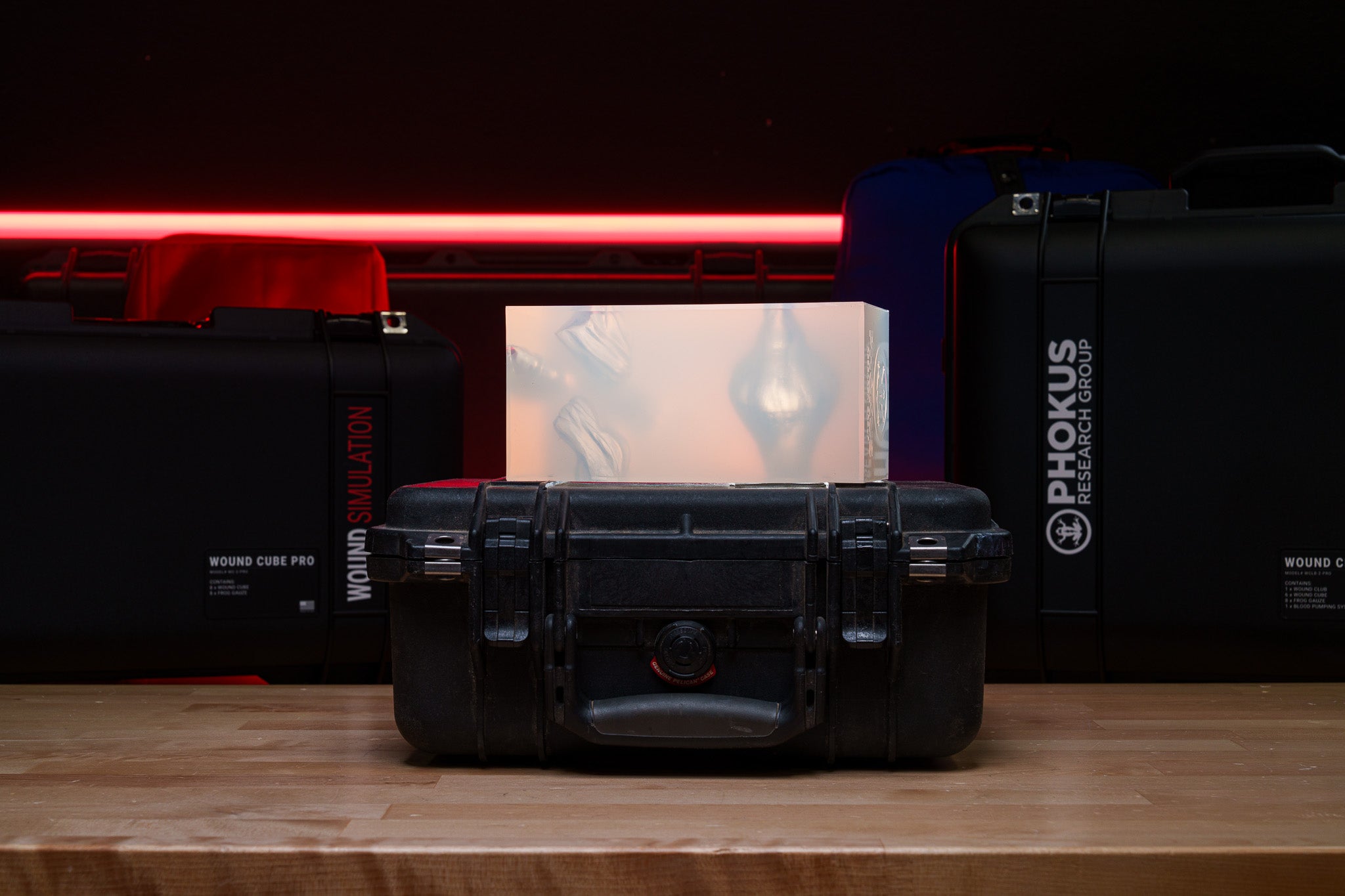
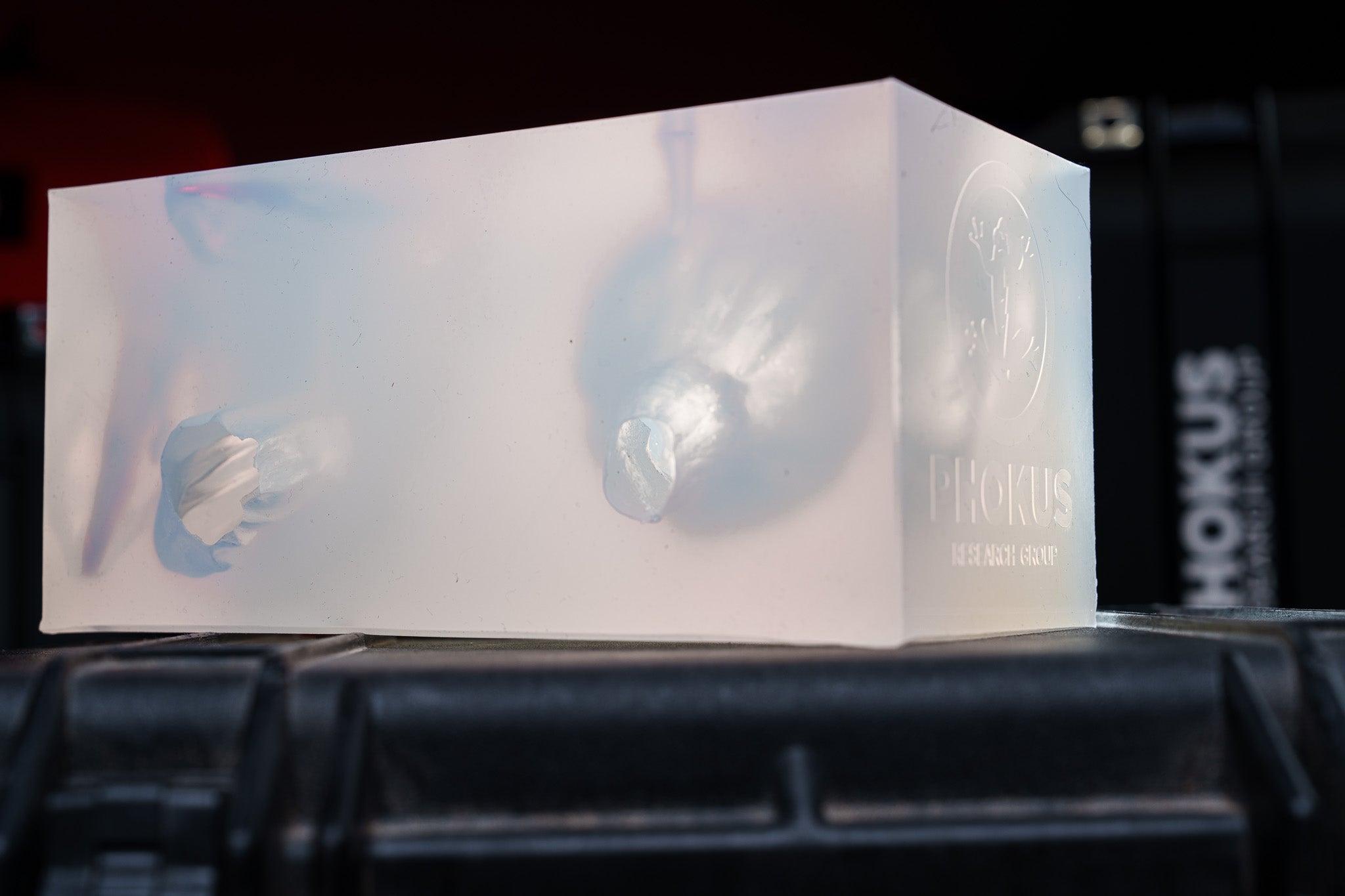
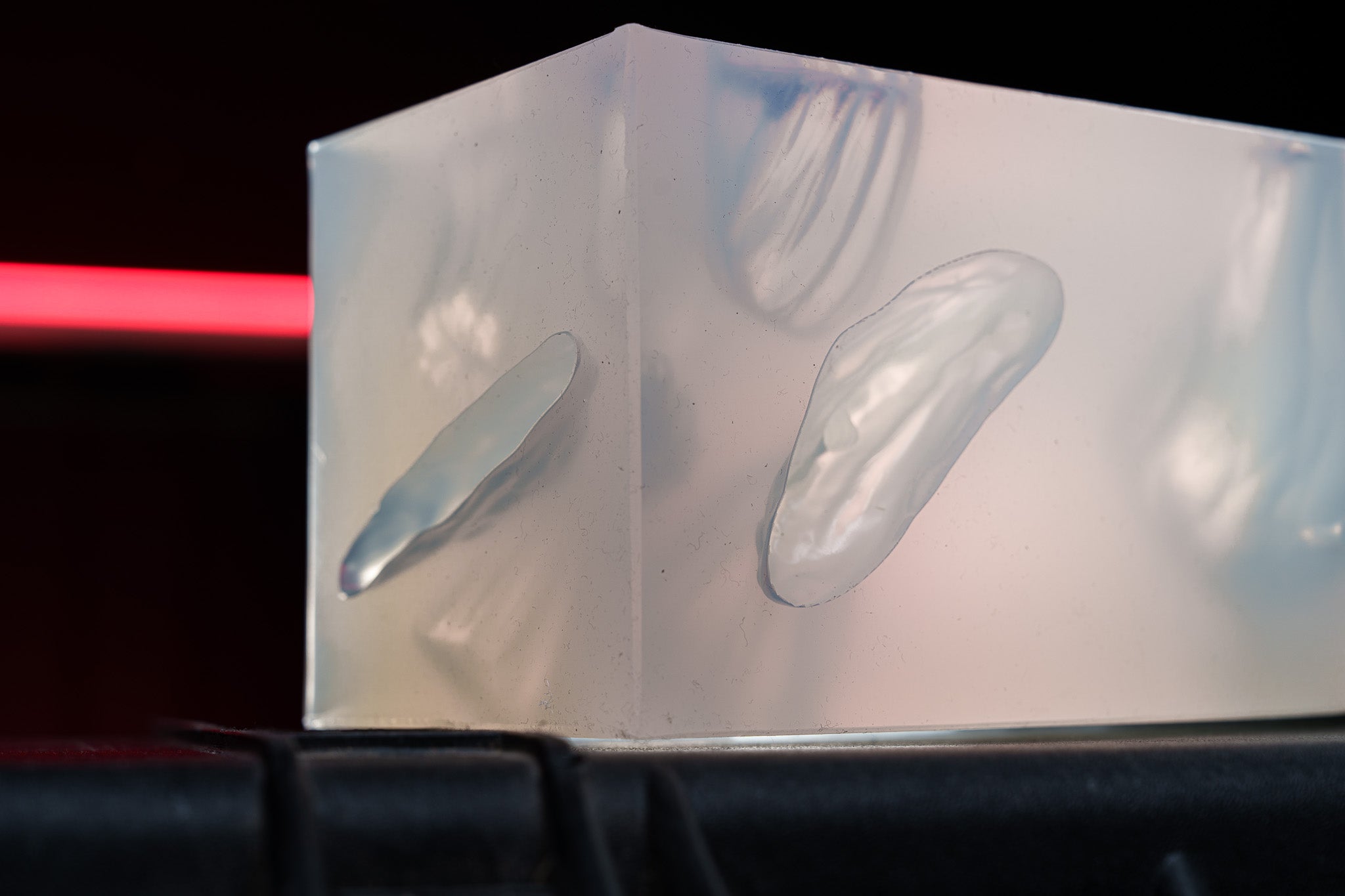
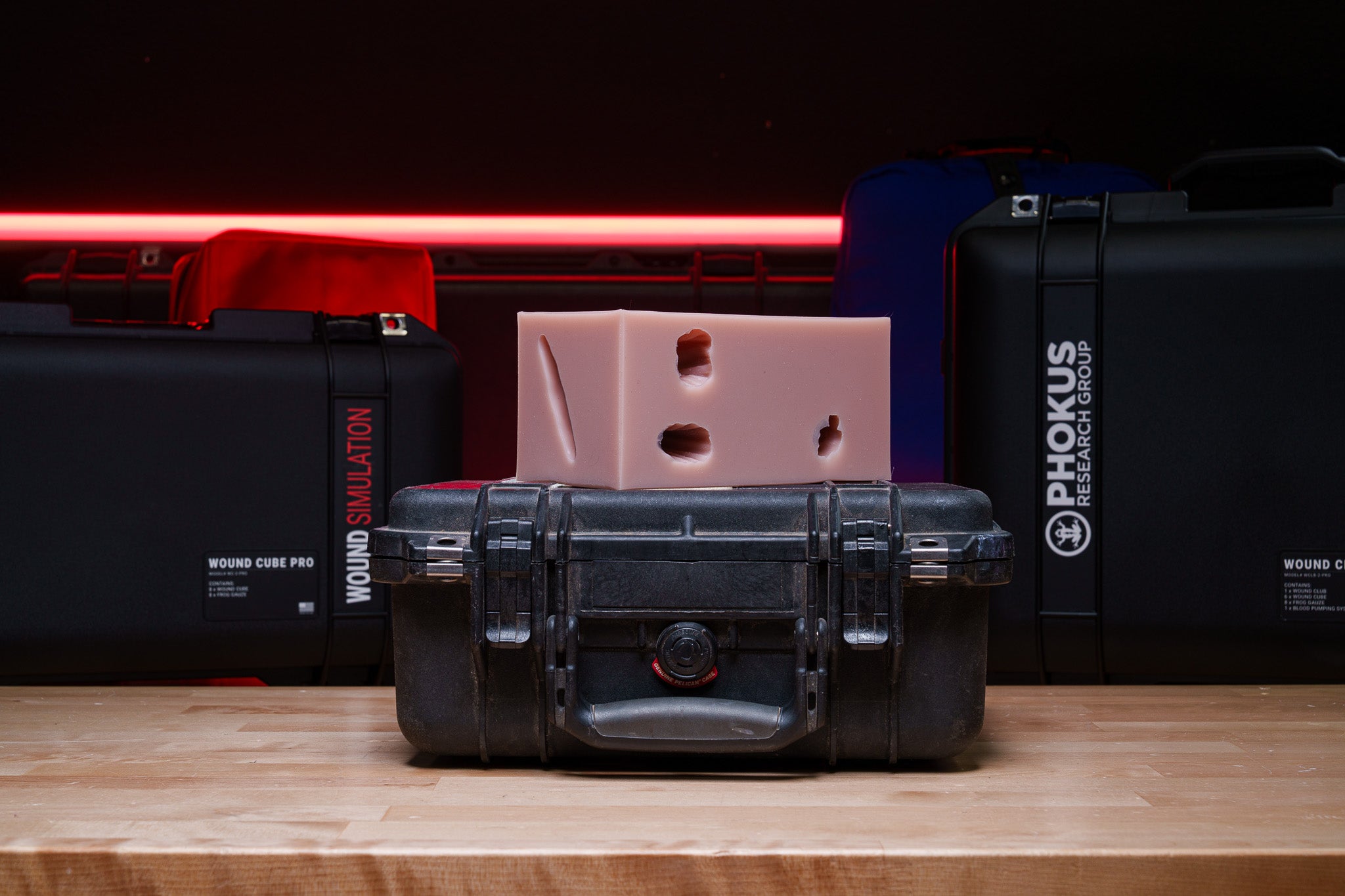
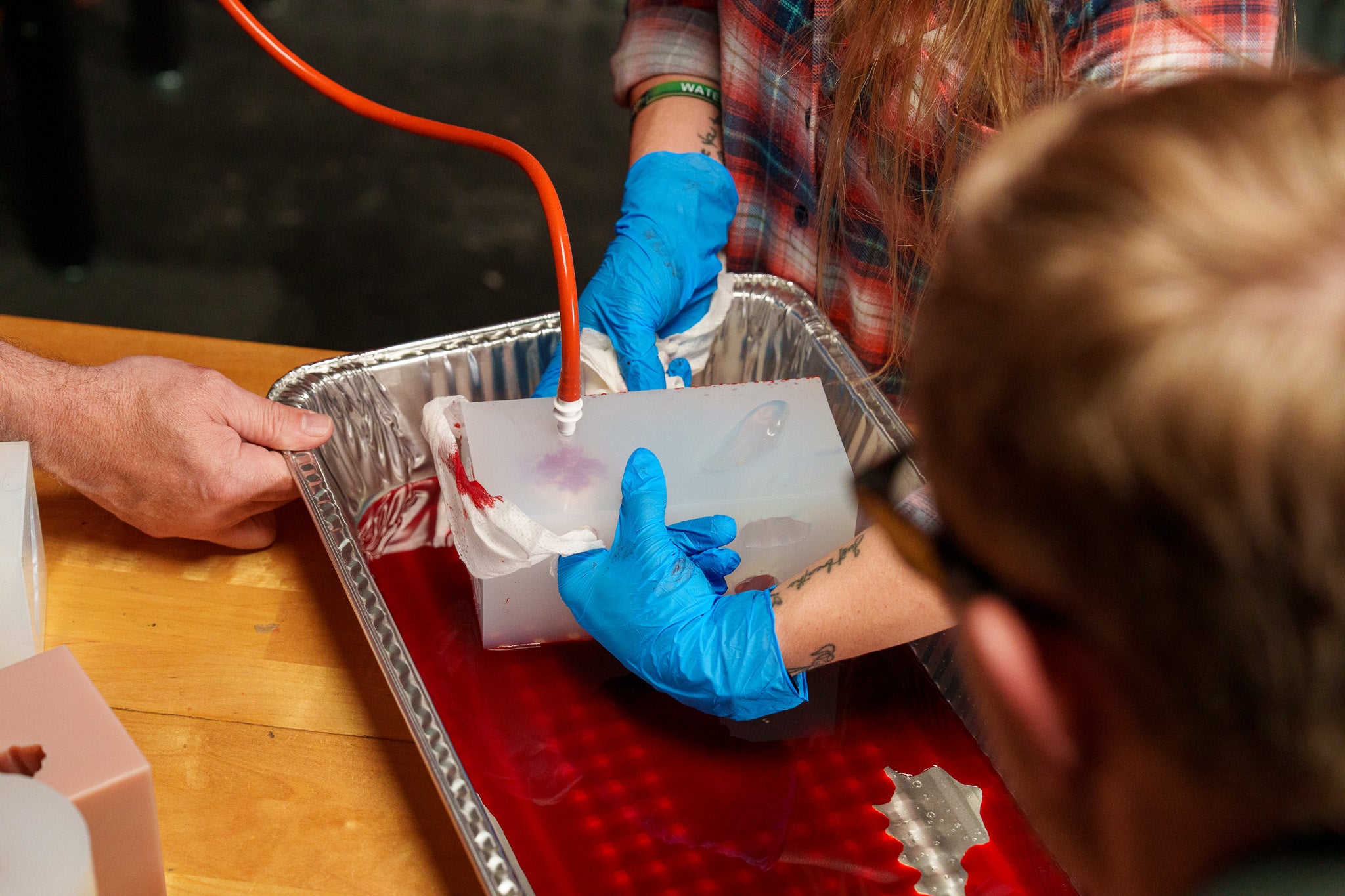
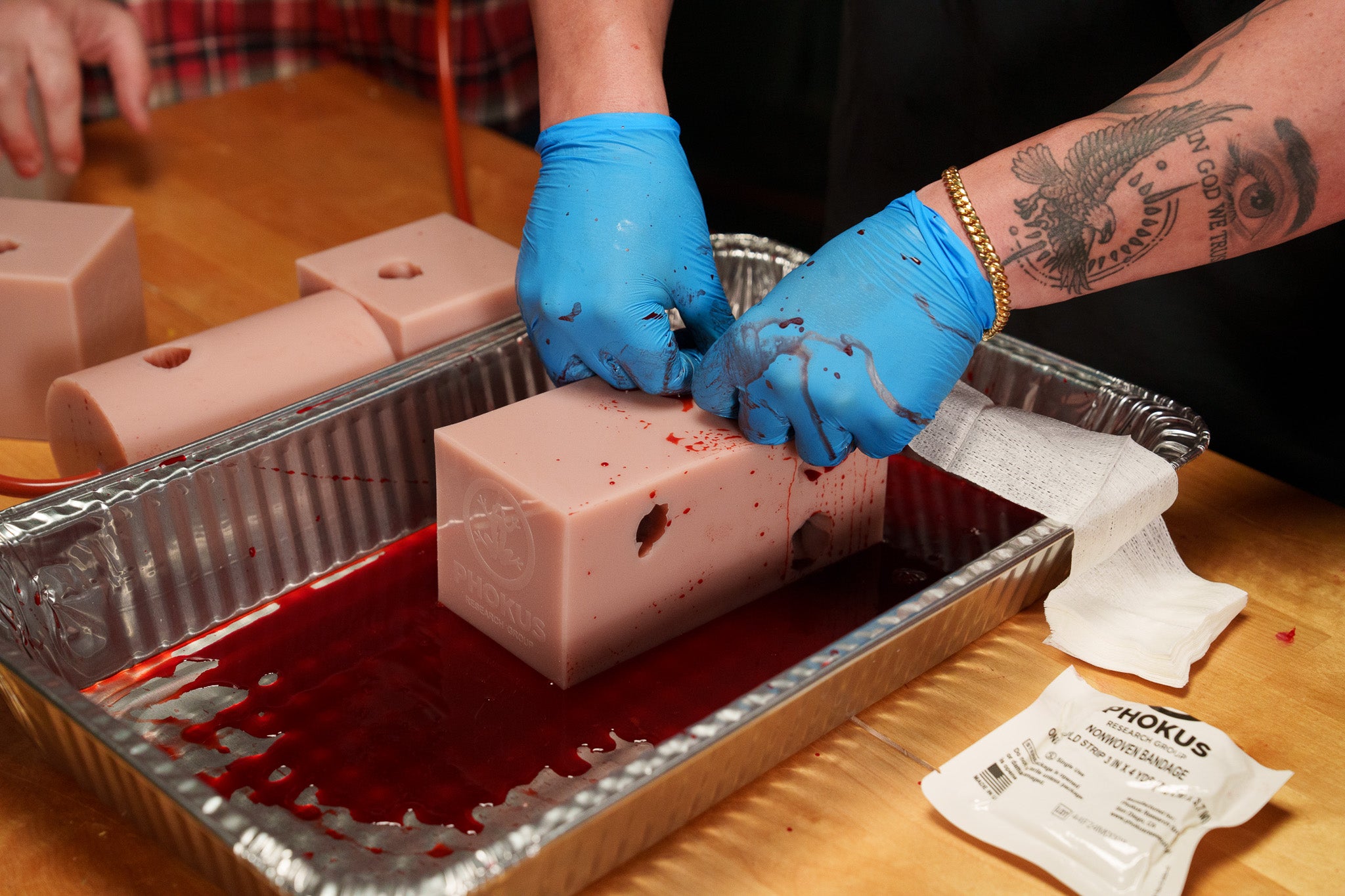
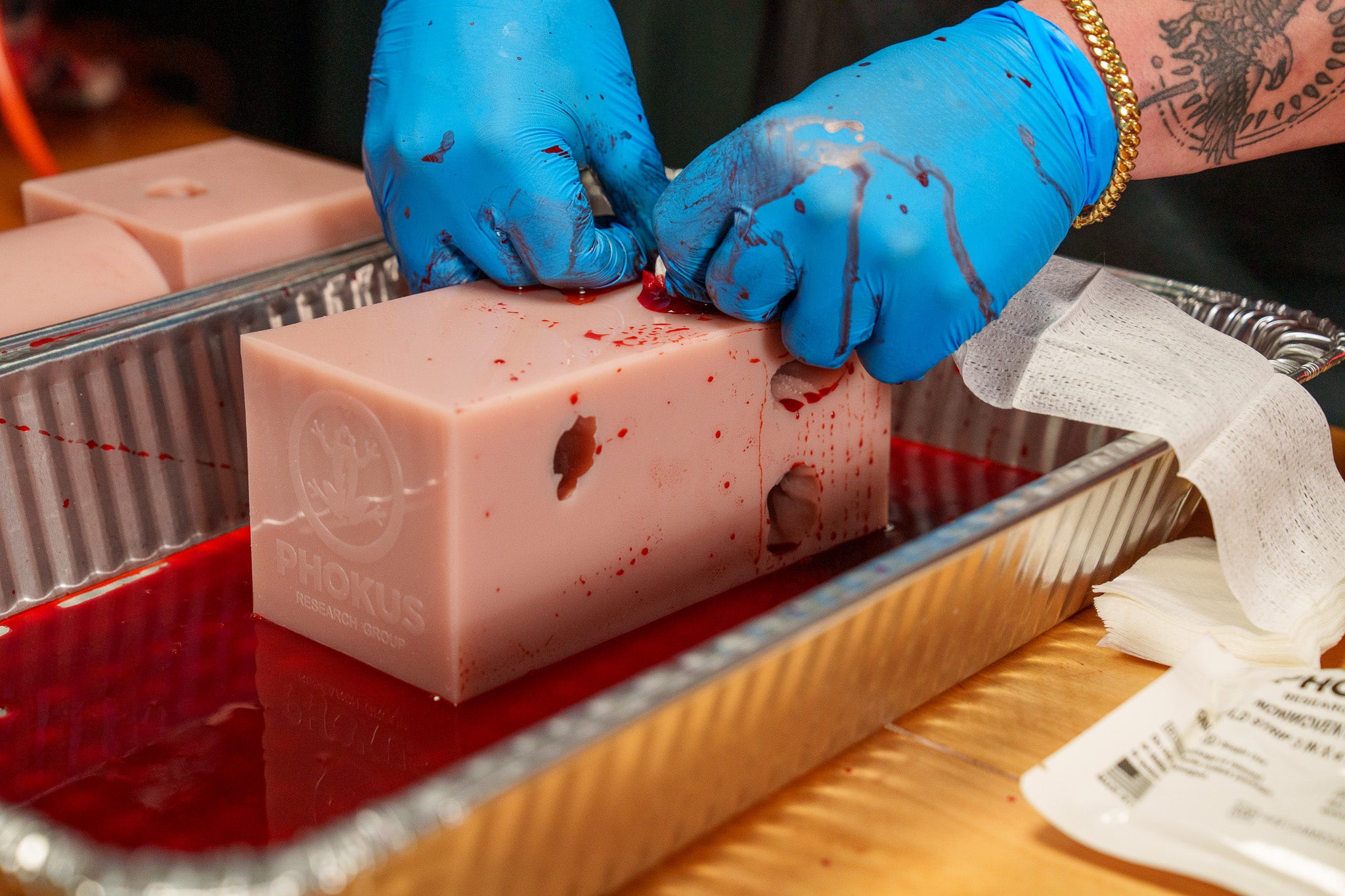
Built as a Wound Cube+™ combined with an additional cube’s worth of silicone, the Wound Brick features a complete through-and-through wound with a significantly enlarged internal cavity — replicating both permanent cavity formation and the cavitation effects of tumbling or fragmenting projectiles. Simple outside. Demanding inside. That’s the point.
WHY THE WOUND BRICK TRAINS WHAT OTHERS DON’T
- Enlarged internal cavity forces deliberate packing. Despite a relatively simple external wound presentation, the internal structure introduces substantial dead space and challenging access angles. Students can’t pack by rote — they have to think, feel, and adapt. That’s the skill that transfers.
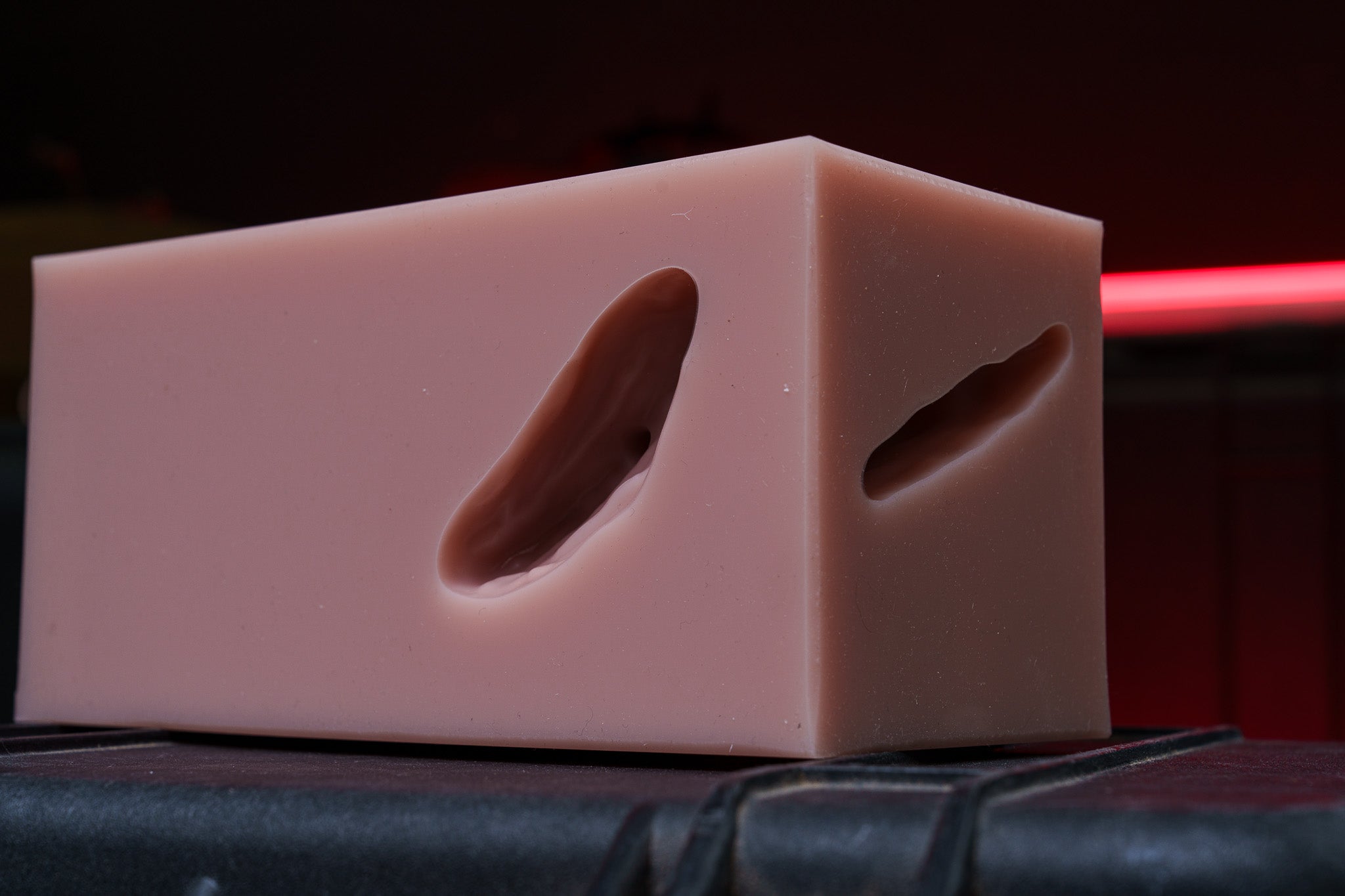
- Through-and-through wound with entry and exit. The Wound Brick’s complete penetrating channel requires students to address both the entry and exit wound — a clinical reality of high-energy penetrating trauma that standard single-wound trainers don’t replicate.
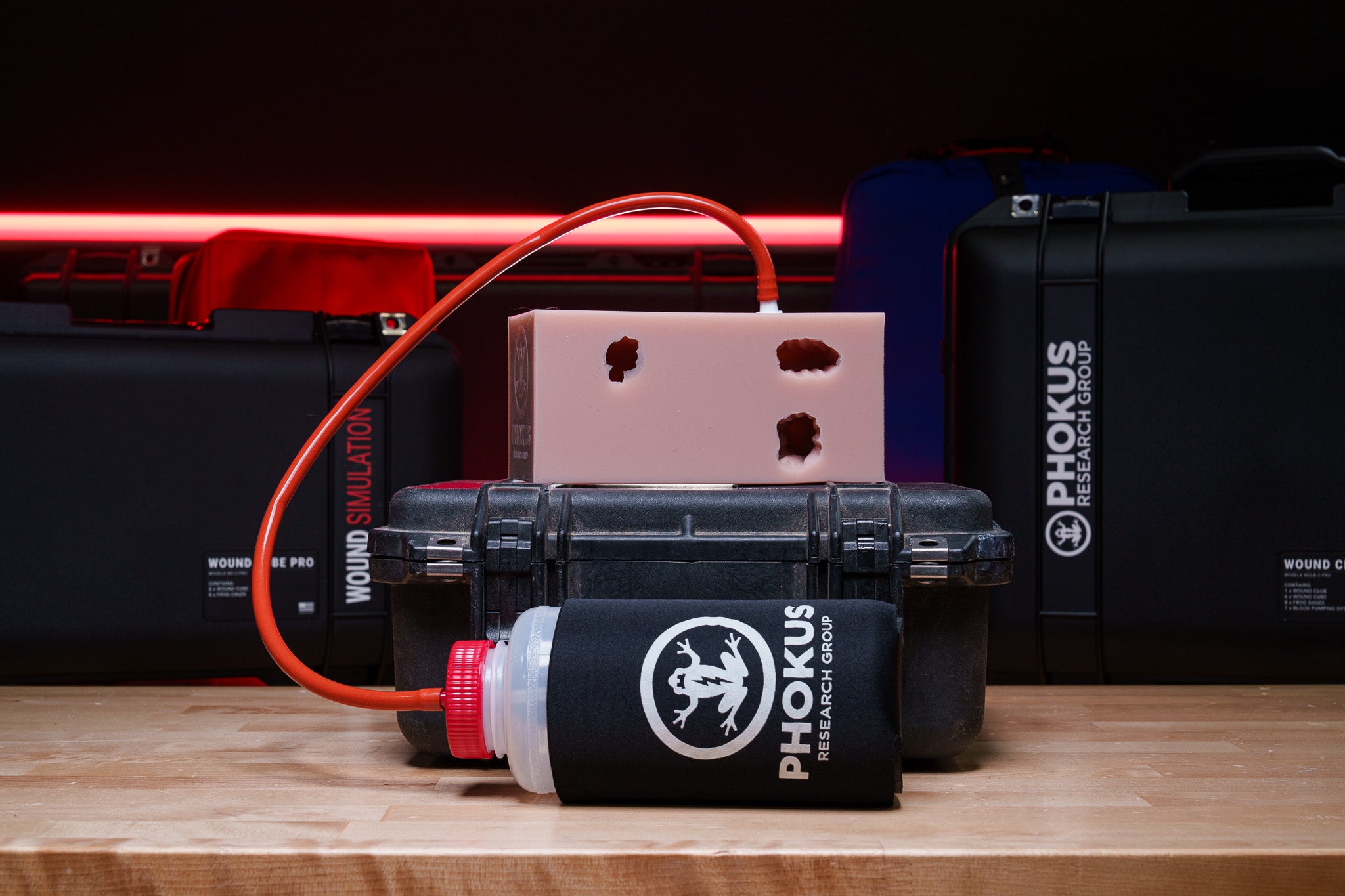
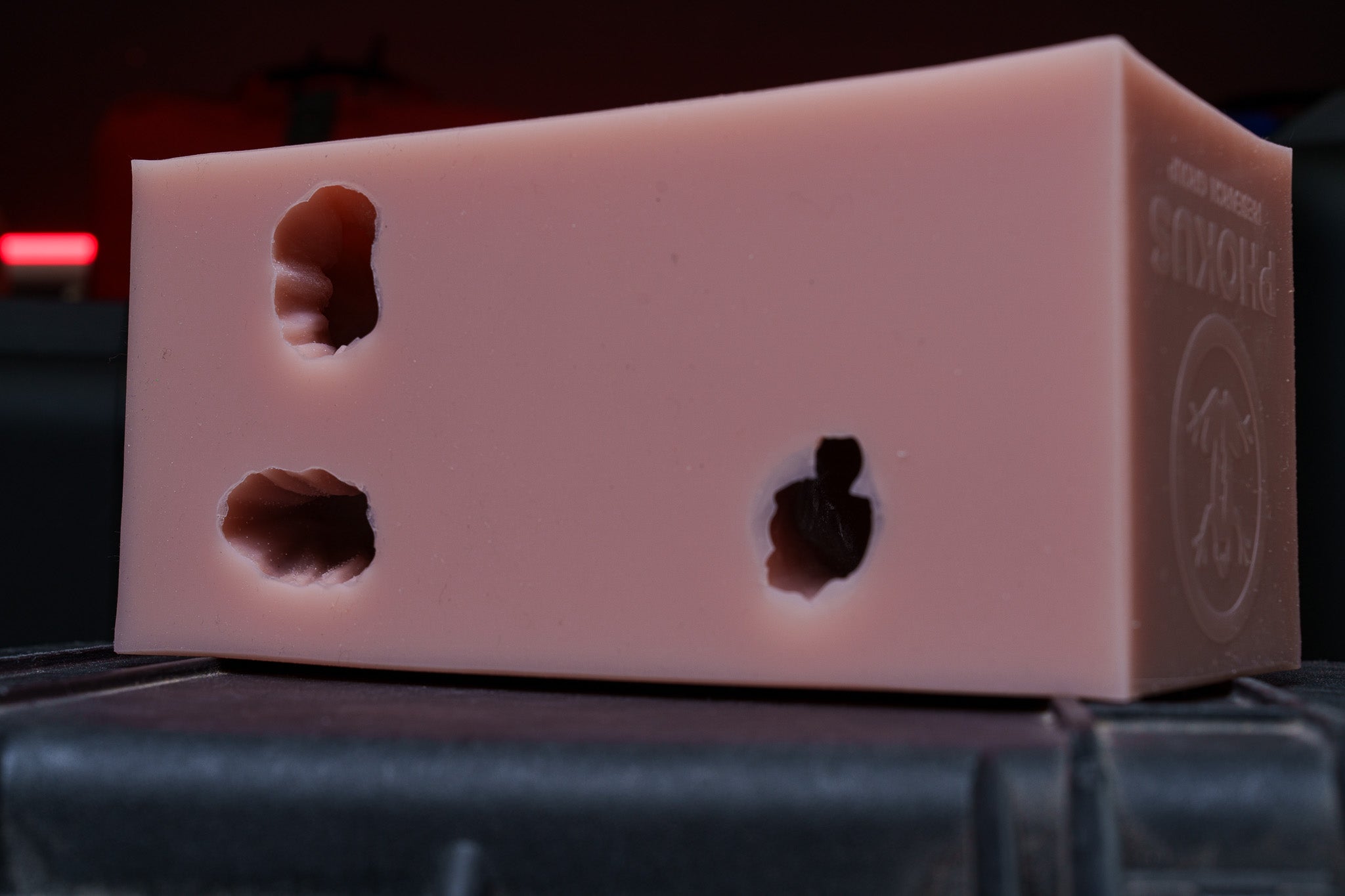
- Three bleed-capable wounds. Three independent bleed-capable wounds support progressive and simultaneous bleeding scenarios. Combined with the complex internal geometry, the Wound Brick creates some of the most technically demanding packing evolutions in the Phokus simulator lineup.
- Built on the proven Wound Cube+ platform. The Wound Brick extends the Cube’s form factor — same compact footprint, same table-ready design, same durability — with double the silicone mass and a wound profile designed specifically for high-energy trauma training.
CHOOSE YOUR TRAINING CONFIGURATION
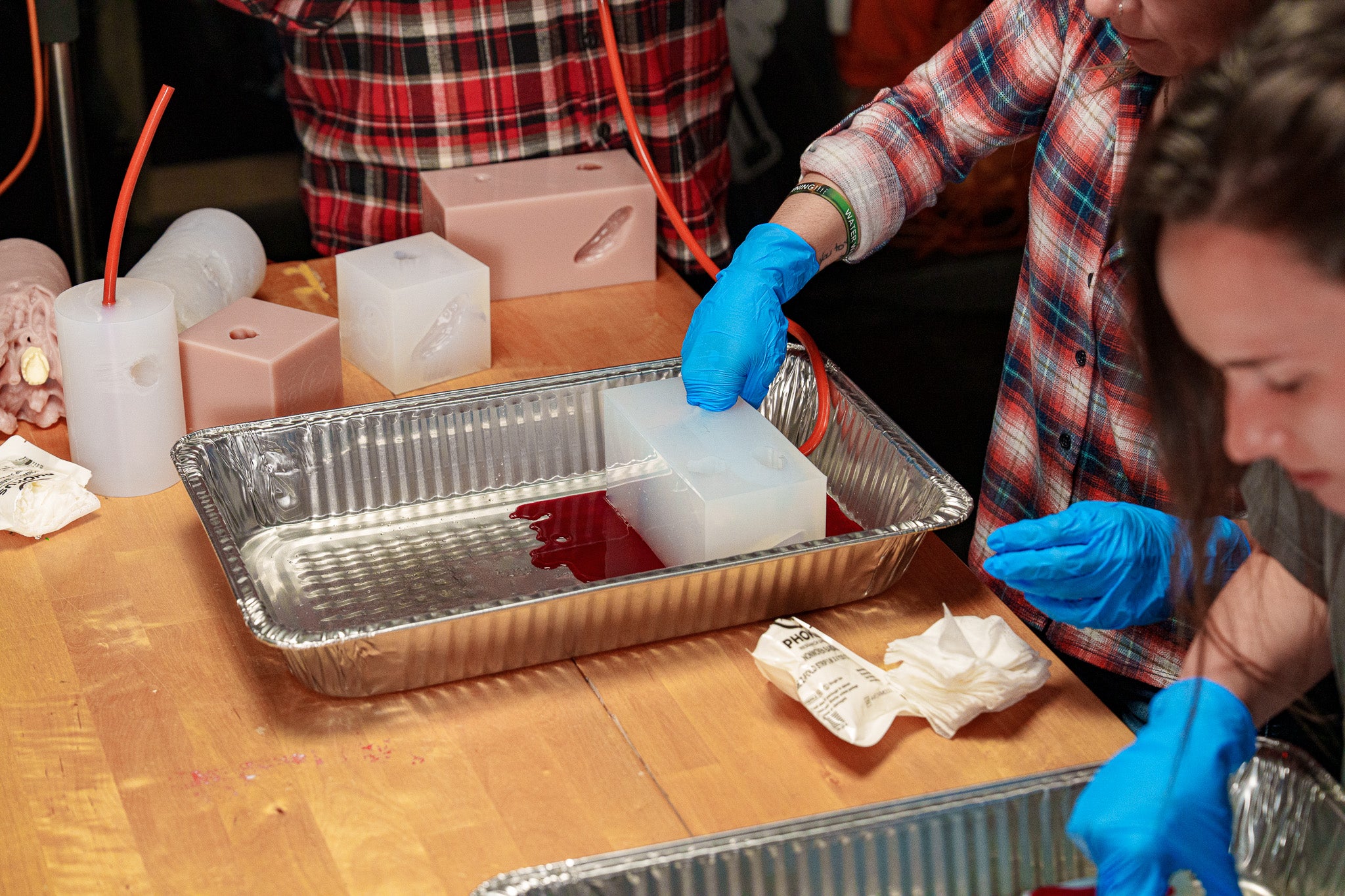
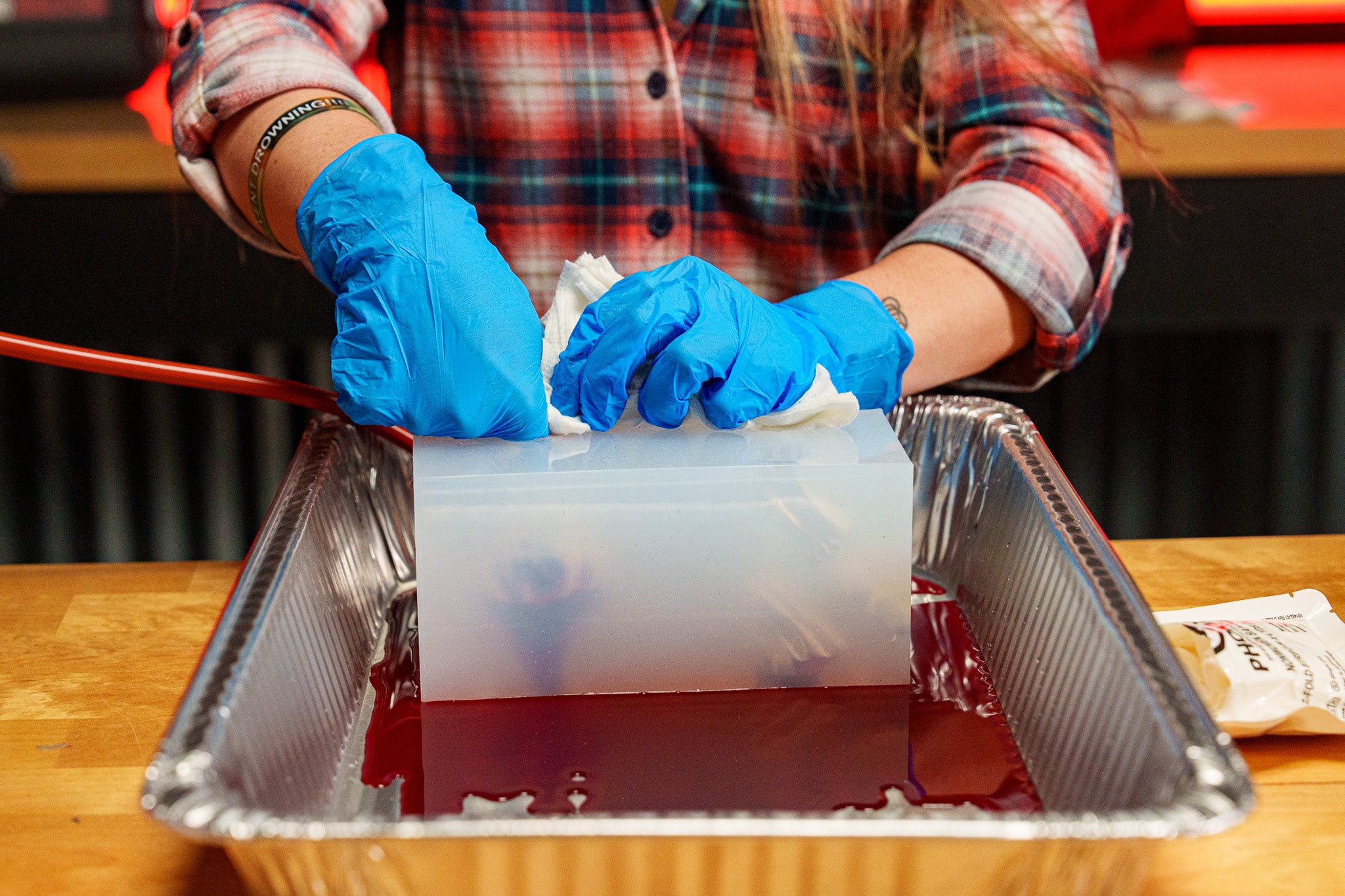
- Semi-Transparent: Reveals internal structures — bleeding pathways, wound cavity depth, and tissue layers. Ideal for foundational instruction where students need to understand the origin of hemorrhage and the anatomy of deliberate wound packing before advancing to higher-stress scenarios.
- Medium Skin Tone: Eliminates visual cues and forces reliance on tactile assessment. Students must identify bleeding sources, wound depth, and packing needs by feel alone — replicating real-world conditions and reinforcing the muscle memory that saves lives when vision is compromised.
WHAT’S INCLUDED
- One Wound Brick™
WOUND FEATURES
- 3x Penetrating Trauma — Flat, Large, and XL
- 2x Large Lacerations
- 1x Entry and exit through-and-through penetrating trauma
- 3x Bleed-Capable Wounds
- Enlarged internal cavity — permanent and temporary cavitation simulation
- Compatible with blood simulant for added realism
SPECIFICATIONS
| Material | Non-Toxic Silicone |
| Size | 4" × 4" × 8" |
| Weight | 3.6 lbs |
TRAINING APPLICATIONS
Validated for use in the following programs:
- TCCC — Tactical Combat Casualty Care
- TECC — Tactical Emergency Casualty Care
- TEMS — Tactical Emergency Medical Support
- PHTLS — Prehospital Trauma Life Support
- Stop the Bleed® — Public hemorrhage control education
PROCUREMENT-READY FOR GOVERNMENT & MILITARY BUYERS
Government and Law Enforcement discounts available. Contact us for agency pricing.
Choose options
WOUND BRICK™
High-Energy Penetrating Trauma. The Internal Damage That Standard Trainers Don’t Replicate.
High-velocity and fragmenting projectiles don’t create simple wound channels. They create permanent cavities, temporary cavitation effects, and irregular internal tissue disruption that bears little resemblance to the clean wound profiles on most training simulators. The Wound Brick™ was engineered to change that.
Built as a Wound Cube+™ combined with an additional cube’s worth of silicone, the Wound Brick features a complete through-and-through wound with a significantly enlarged internal cavity — replicating both permanent cavity formation and the cavitation effects of tumbling or fragmenting projectiles. Simple outside. Demanding inside. That’s the point.
WHY THE WOUND BRICK TRAINS WHAT OTHERS DON’T
- Enlarged internal cavity forces deliberate packing. Despite a relatively simple external wound presentation, the internal structure introduces substantial dead space and challenging access angles. Students can’t pack by rote — they have to think, feel, and adapt. That’s the skill that transfers.
- Through-and-through wound with entry and exit. The Wound Brick’s complete penetrating channel requires students to address both the entry and exit wound — a clinical reality of high-energy penetrating trauma that standard single-wound trainers don’t replicate.
- Three bleed-capable wounds. Three independent bleed-capable wounds support progressive and simultaneous bleeding scenarios. Combined with the complex internal geometry, the Wound Brick creates some of the most technically demanding packing evolutions in the Phokus simulator lineup.
- Built on the proven Wound Cube+ platform. The Wound Brick extends the Cube’s form factor — same compact footprint, same table-ready design, same durability — with double the silicone mass and a wound profile designed specifically for high-energy trauma training.
CHOOSE YOUR TRAINING CONFIGURATION
- Semi-Transparent: Reveals internal structures — bleeding pathways, wound cavity depth, and tissue layers. Ideal for foundational instruction where students need to understand the origin of hemorrhage and the anatomy of deliberate wound packing before advancing to higher-stress scenarios.
- Medium Skin Tone: Eliminates visual cues and forces reliance on tactile assessment. Students must identify bleeding sources, wound depth, and packing needs by feel alone — replicating real-world conditions and reinforcing the muscle memory that saves lives when vision is compromised.
WHAT’S INCLUDED
- One Wound Brick™
WOUND FEATURES
- 3x Penetrating Trauma — Flat, Large, and XL
- 2x Large Lacerations
- 1x Entry and exit through-and-through penetrating trauma
- 3x Bleed-Capable Wounds
- Enlarged internal cavity — permanent and temporary cavitation simulation
- Compatible with blood simulant for added realism
SPECIFICATIONS
| Material | Non-Toxic Silicone |
| Size | 4" × 4" × 8" |
| Weight | 3.6 lbs |
TRAINING APPLICATIONS
Validated for use in the following programs:
- TCCC — Tactical Combat Casualty Care
- TECC — Tactical Emergency Casualty Care
- TEMS — Tactical Emergency Medical Support
- PHTLS — Prehospital Trauma Life Support
- Stop the Bleed® — Public hemorrhage control education
PROCUREMENT-READY FOR GOVERNMENT & MILITARY BUYERS
Government and Law Enforcement discounts available. Contact us for agency pricing.
WOUND BRICK™
High-Energy Penetrating Trauma. The Internal Damage That Standard Trainers Don’t Replicate.
High-velocity and fragmenting projectiles don’t create simple wound channels. They create permanent cavities, temporary cavitation effects, and irregular internal tissue disruption that bears little resemblance to the clean wound profiles on most training simulators. The Wound Brick™ was engineered to change that.
Built as a Wound Cube+™ combined with an additional cube’s worth of silicone, the Wound Brick features a complete through-and-through wound with a significantly enlarged internal cavity — replicating both permanent cavity formation and the cavitation effects of tumbling or fragmenting projectiles. Simple outside. Demanding inside. That’s the point.
WHY THE WOUND BRICK TRAINS WHAT OTHERS DON’T
- Enlarged internal cavity forces deliberate packing. Despite a relatively simple external wound presentation, the internal structure introduces substantial dead space and challenging access angles. Students can’t pack by rote — they have to think, feel, and adapt. That’s the skill that transfers.
- Through-and-through wound with entry and exit. The Wound Brick’s complete penetrating channel requires students to address both the entry and exit wound — a clinical reality of high-energy penetrating trauma that standard single-wound trainers don’t replicate.
- Three bleed-capable wounds. Three independent bleed-capable wounds support progressive and simultaneous bleeding scenarios. Combined with the complex internal geometry, the Wound Brick creates some of the most technically demanding packing evolutions in the Phokus simulator lineup.
- Built on the proven Wound Cube+ platform. The Wound Brick extends the Cube’s form factor — same compact footprint, same table-ready design, same durability — with double the silicone mass and a wound profile designed specifically for high-energy trauma training.
CHOOSE YOUR TRAINING CONFIGURATION
- Semi-Transparent: Reveals internal structures — bleeding pathways, wound cavity depth, and tissue layers. Ideal for foundational instruction where students need to understand the origin of hemorrhage and the anatomy of deliberate wound packing before advancing to higher-stress scenarios.
- Medium Skin Tone: Eliminates visual cues and forces reliance on tactile assessment. Students must identify bleeding sources, wound depth, and packing needs by feel alone — replicating real-world conditions and reinforcing the muscle memory that saves lives when vision is compromised.
WHAT’S INCLUDED
- One Wound Brick™
WOUND FEATURES
- 3x Penetrating Trauma — Flat, Large, and XL
- 2x Large Lacerations
- 1x Entry and exit through-and-through penetrating trauma
- 3x Bleed-Capable Wounds
- Enlarged internal cavity — permanent and temporary cavitation simulation
- Compatible with blood simulant for added realism
SPECIFICATIONS
| Material | Non-Toxic Silicone |
| Size | 4" × 4" × 8" |
| Weight | 3.6 lbs |
TRAINING APPLICATIONS
Validated for use in the following programs:
- TCCC — Tactical Combat Casualty Care
- TECC — Tactical Emergency Casualty Care
- TEMS — Tactical Emergency Medical Support
- PHTLS — Prehospital Trauma Life Support
- Stop the Bleed® — Public hemorrhage control education
PROCUREMENT-READY FOR GOVERNMENT & MILITARY BUYERS
Government and Law Enforcement discounts available. Contact us for agency pricing.