
Phokus Research Group
Wound Stump
WOUND STUMP™
Traumatic Amputation Training. The Skills Are Different. The Trainer Has to Match.
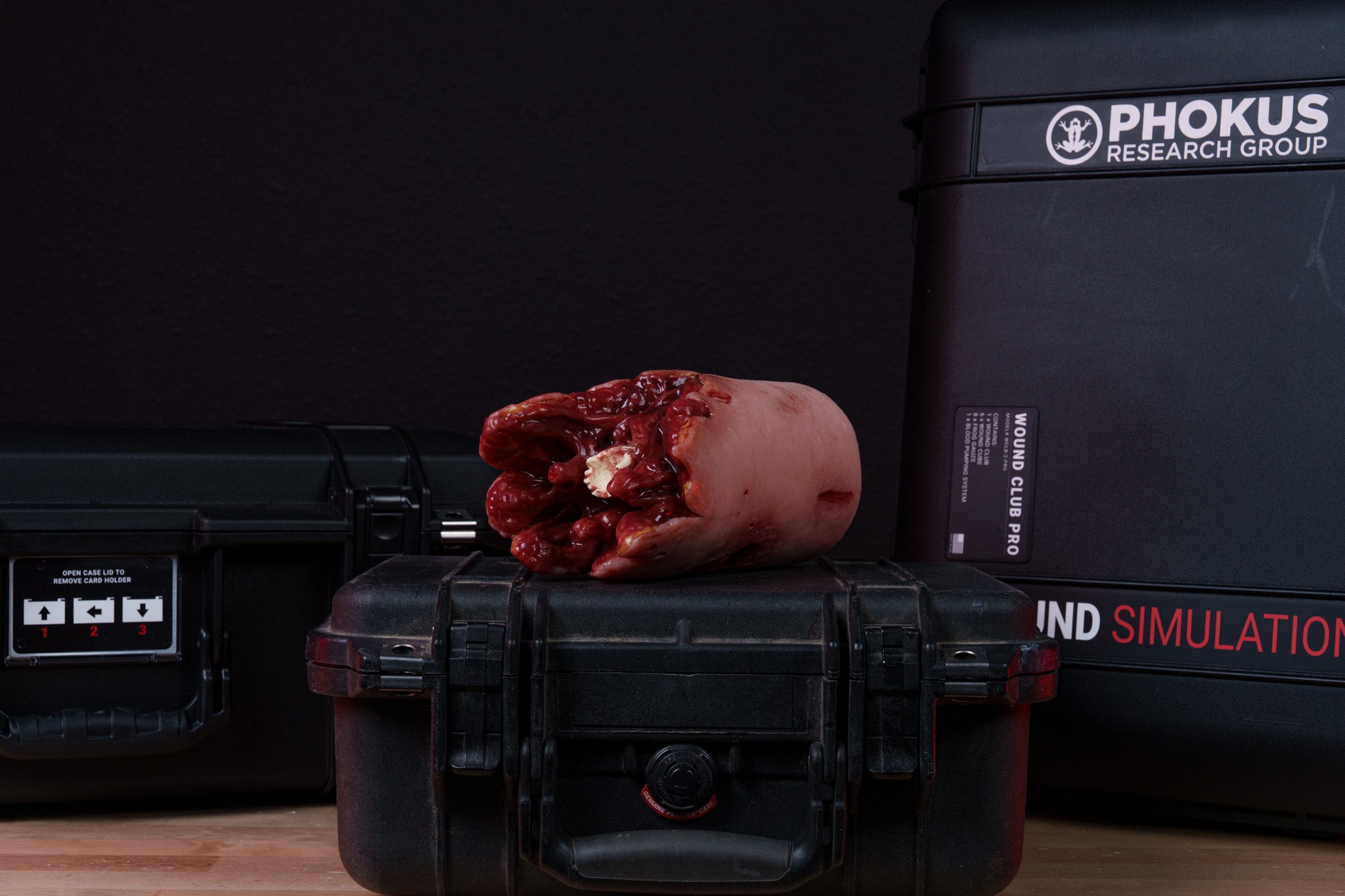
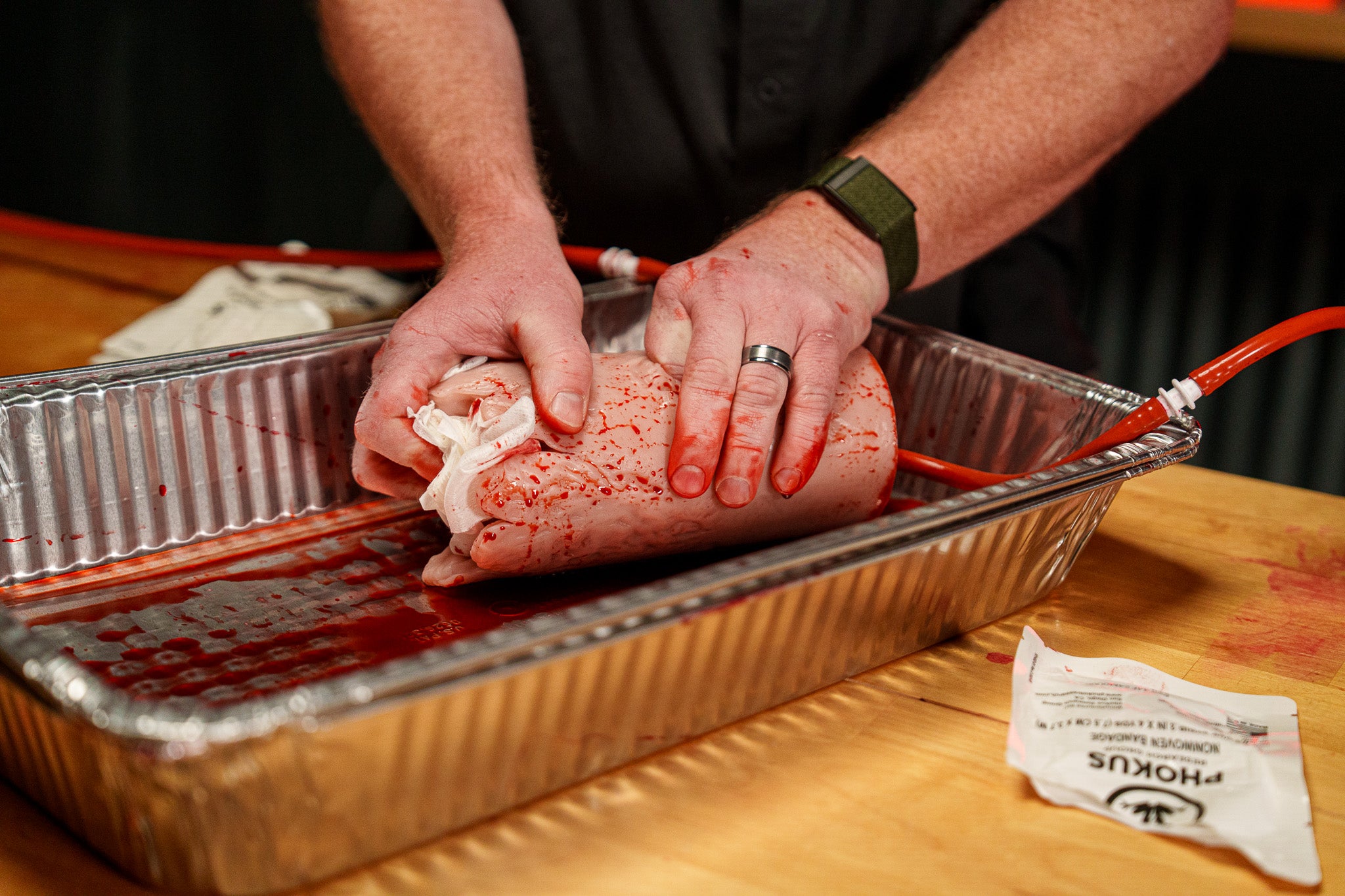
Managing hemorrhage at a traumatic amputation is a distinct clinical skill — not a variation of wound packing on intact limbs. The bone is exposed. The tissue disruption is complex. The dead space is irregular. The wrapping and pressure techniques differ significantly from standard extremity wound management. The Wound Stump™ was built to train exactly that.
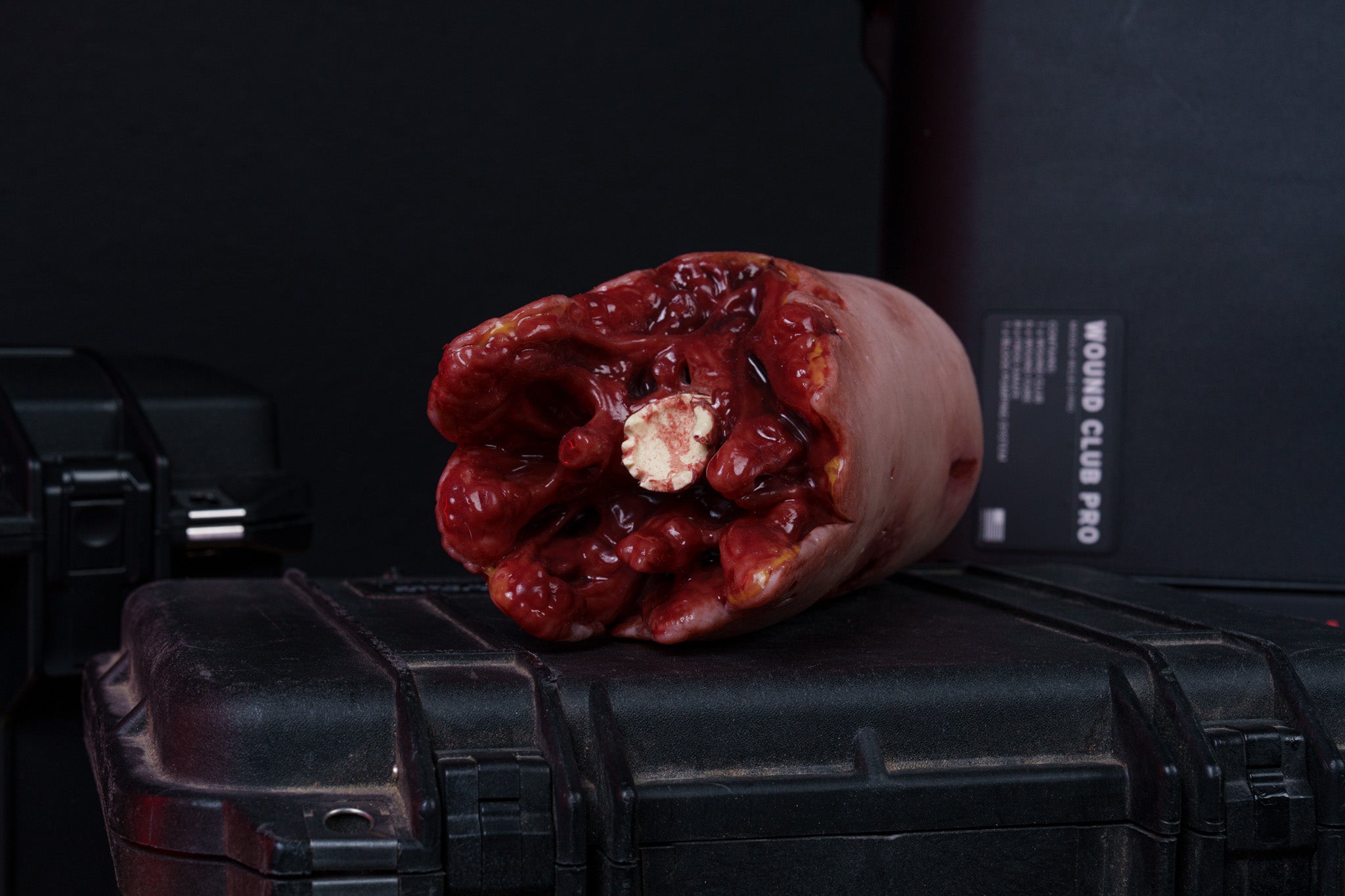
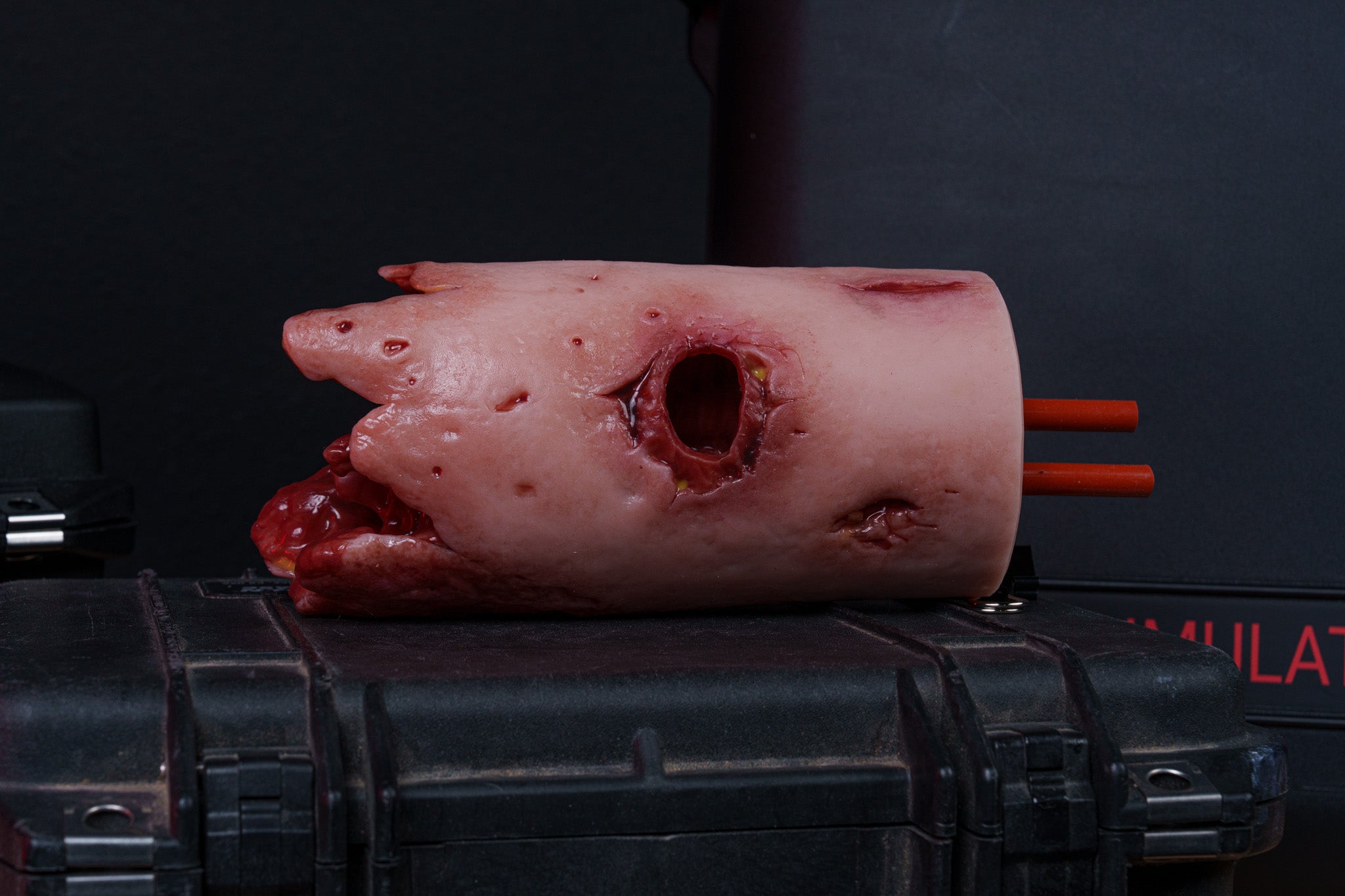
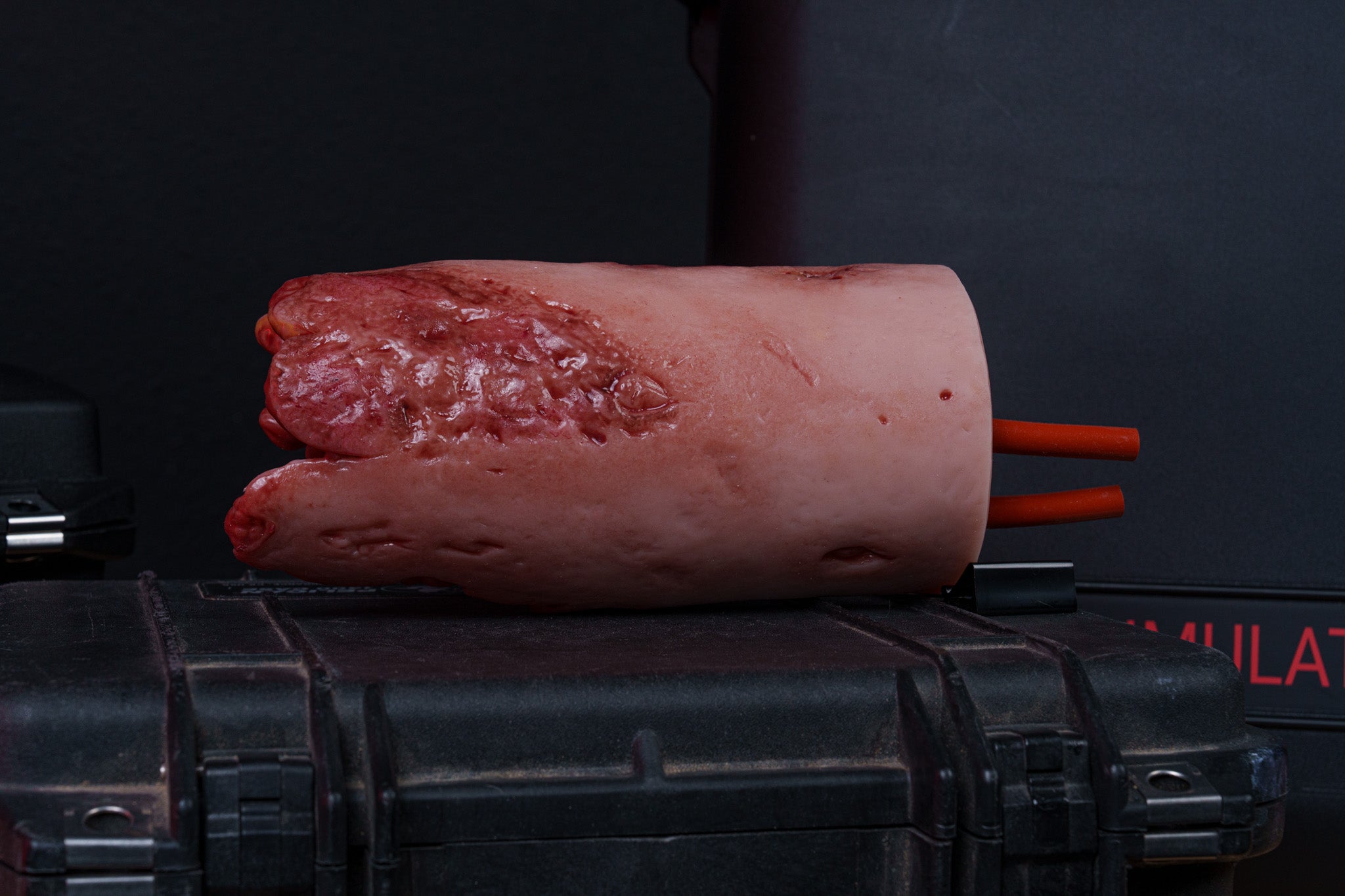
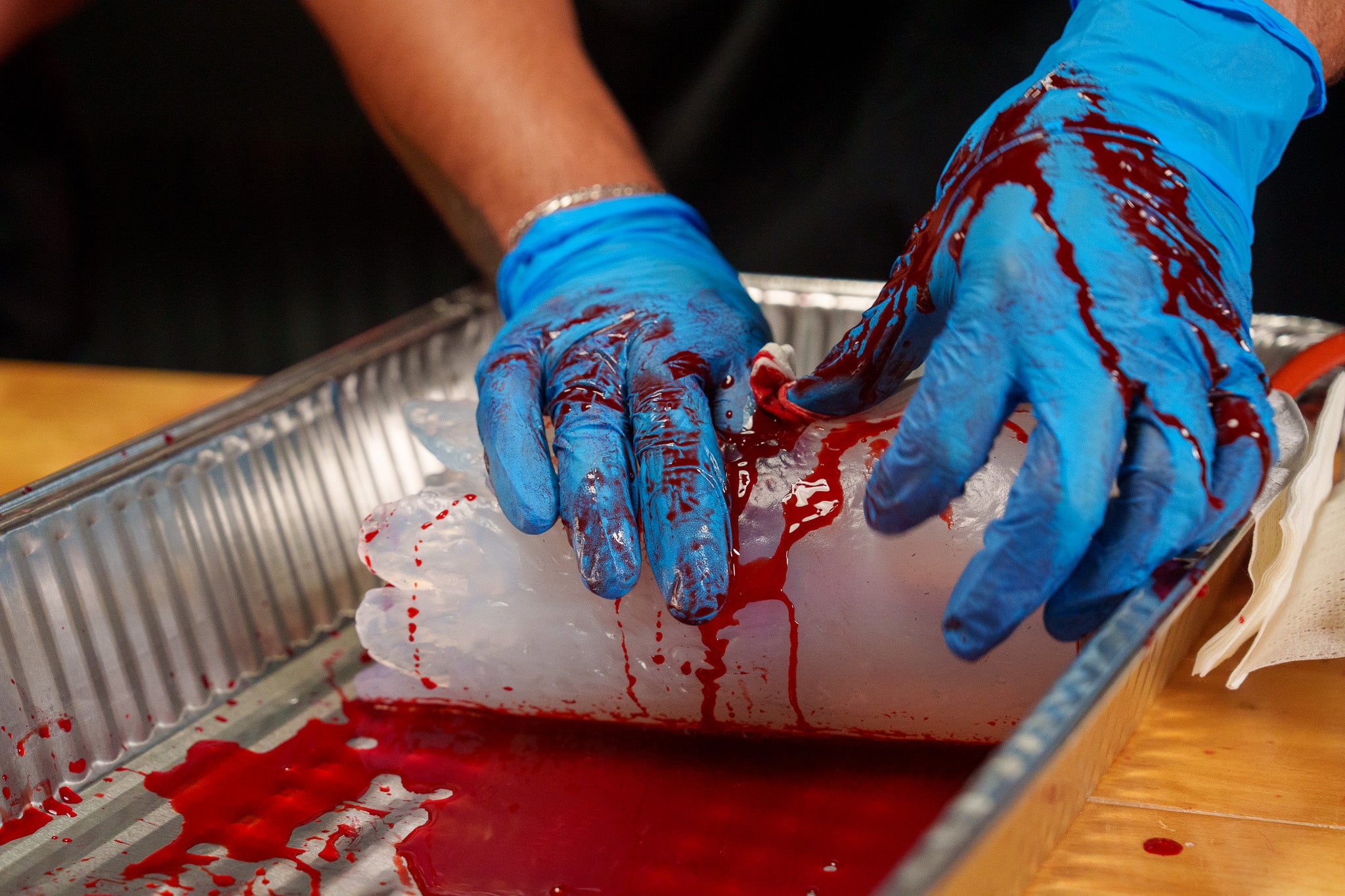
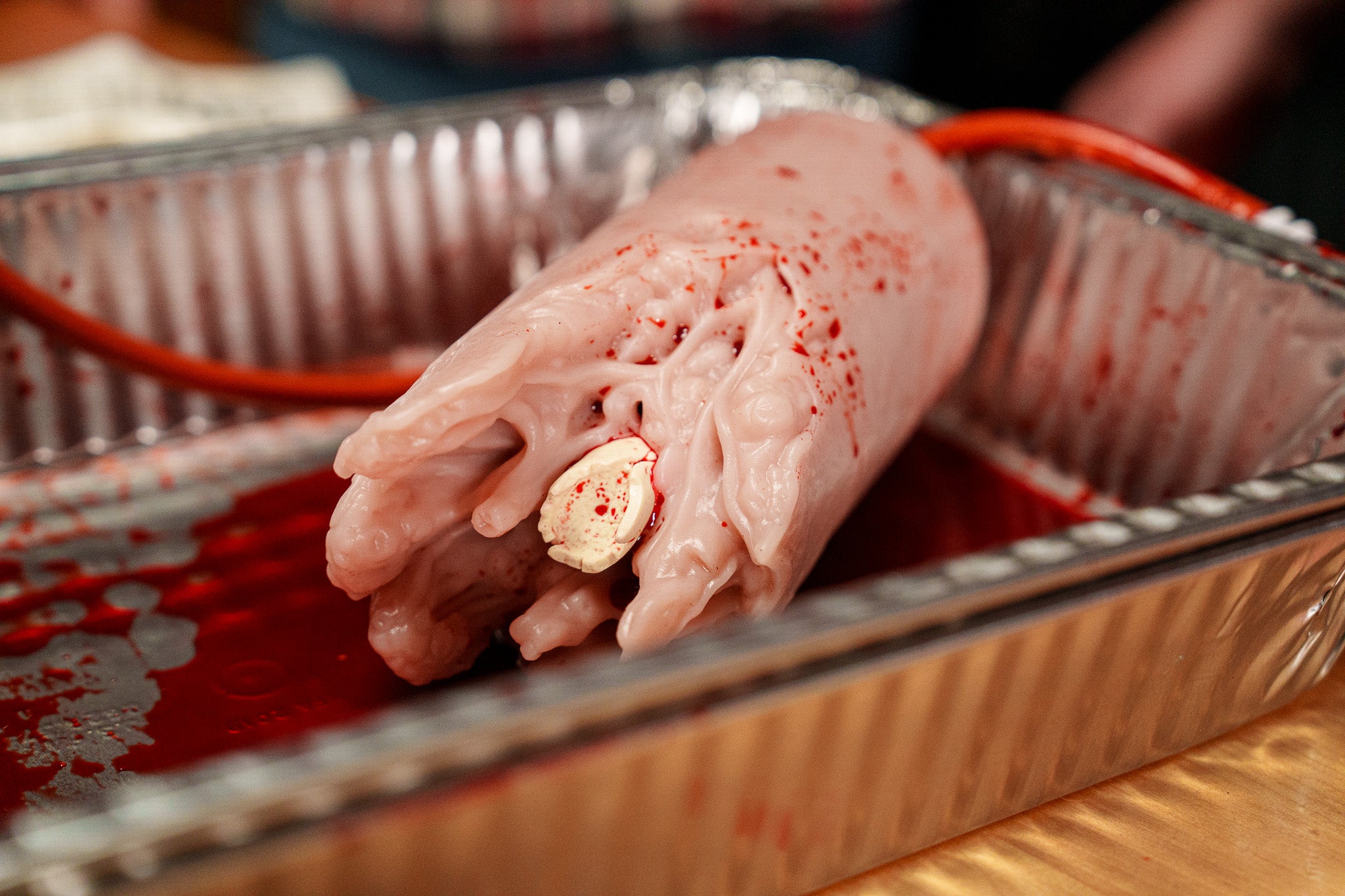
Featuring fractured bone, dense soft tissue, multiple bleeding pathways, complex dead space, and a bone-adjacent arterial bleeder, the Wound Stump replicates the specific challenges of amputated extremity hemorrhage control with the tactile fidelity that builds real competency because the responders who encounter this injury deserve training that matches what they’ll face.
WHAT THE WOUND STUMP TRAINS
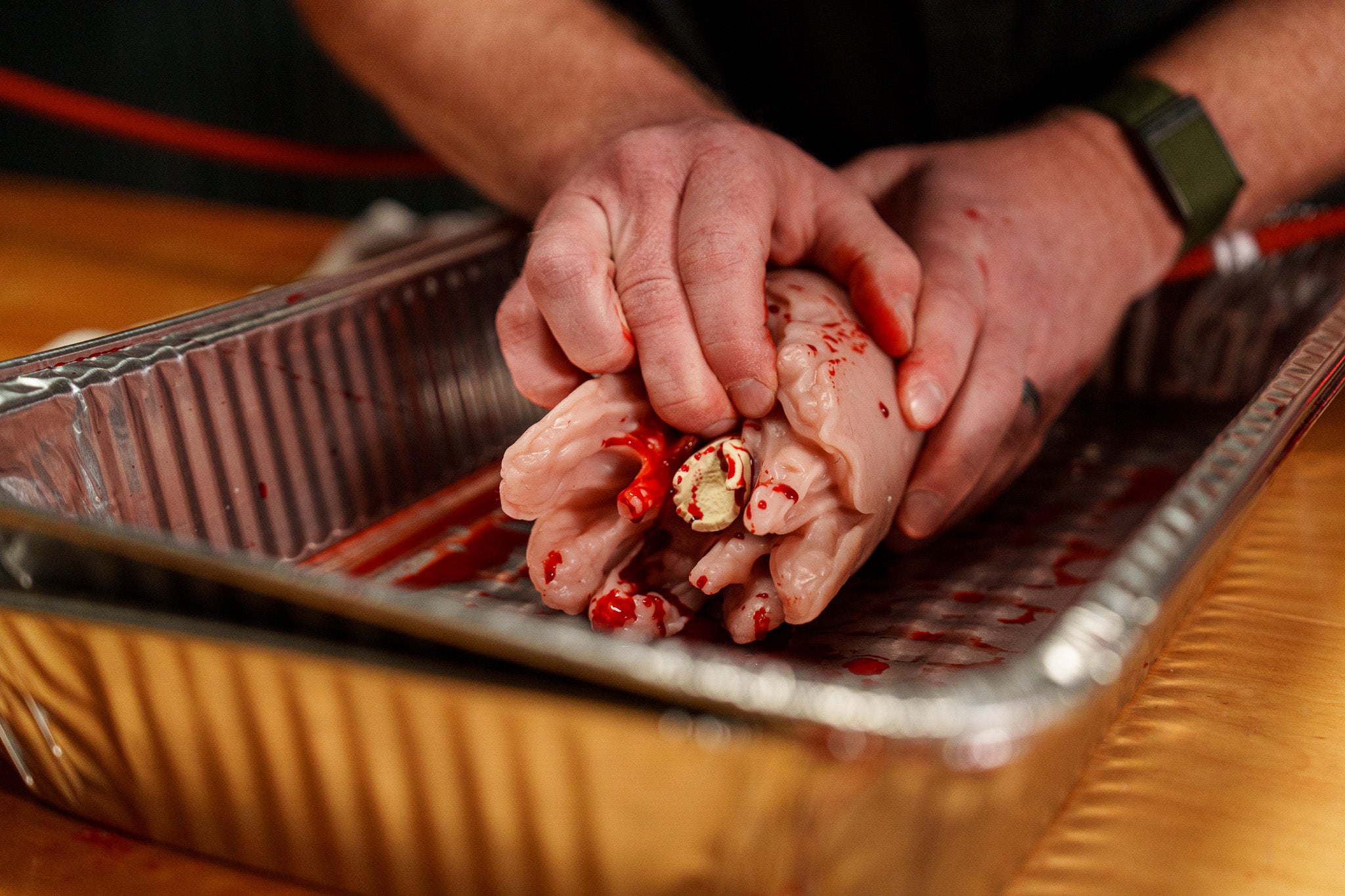
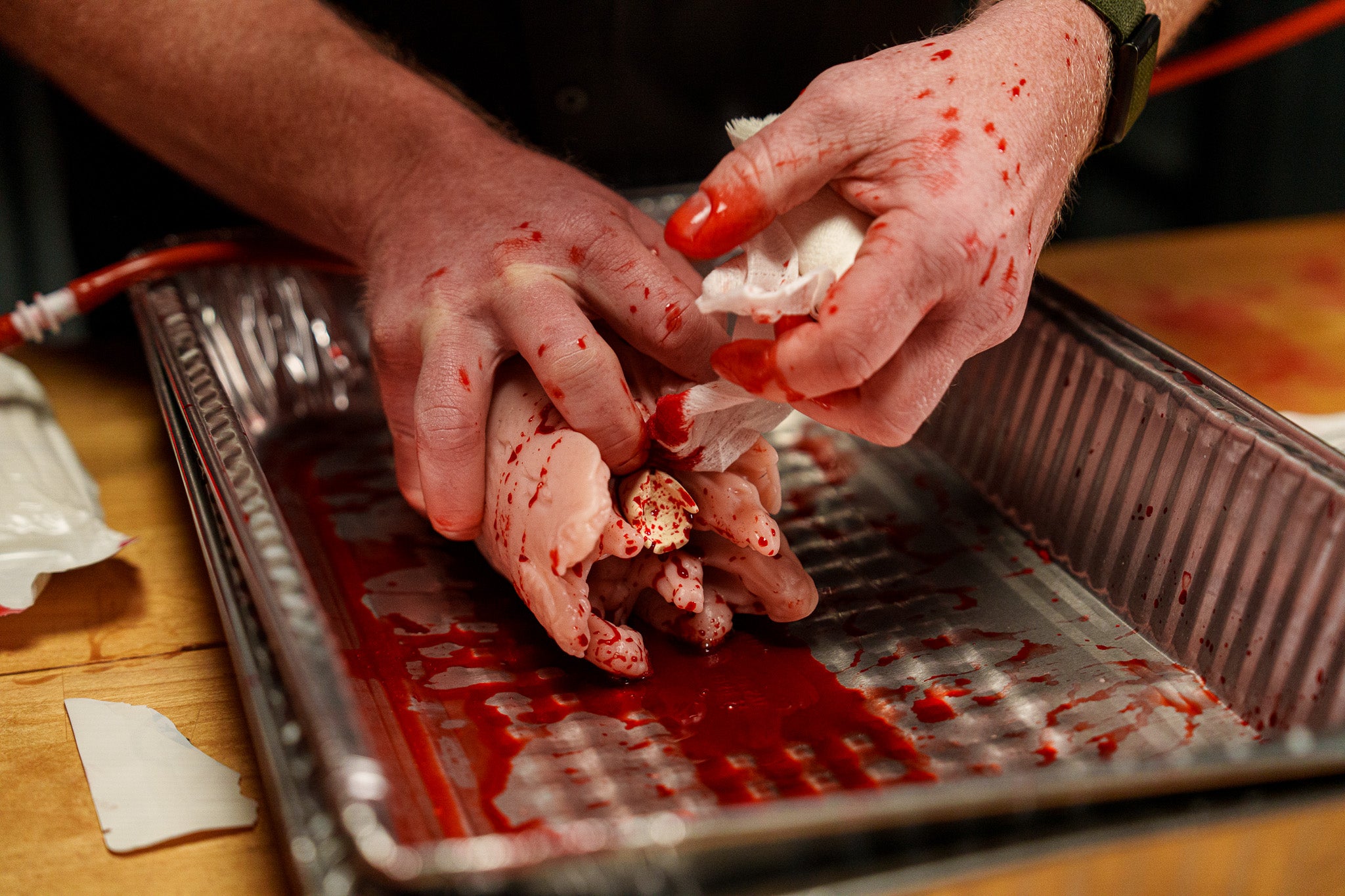
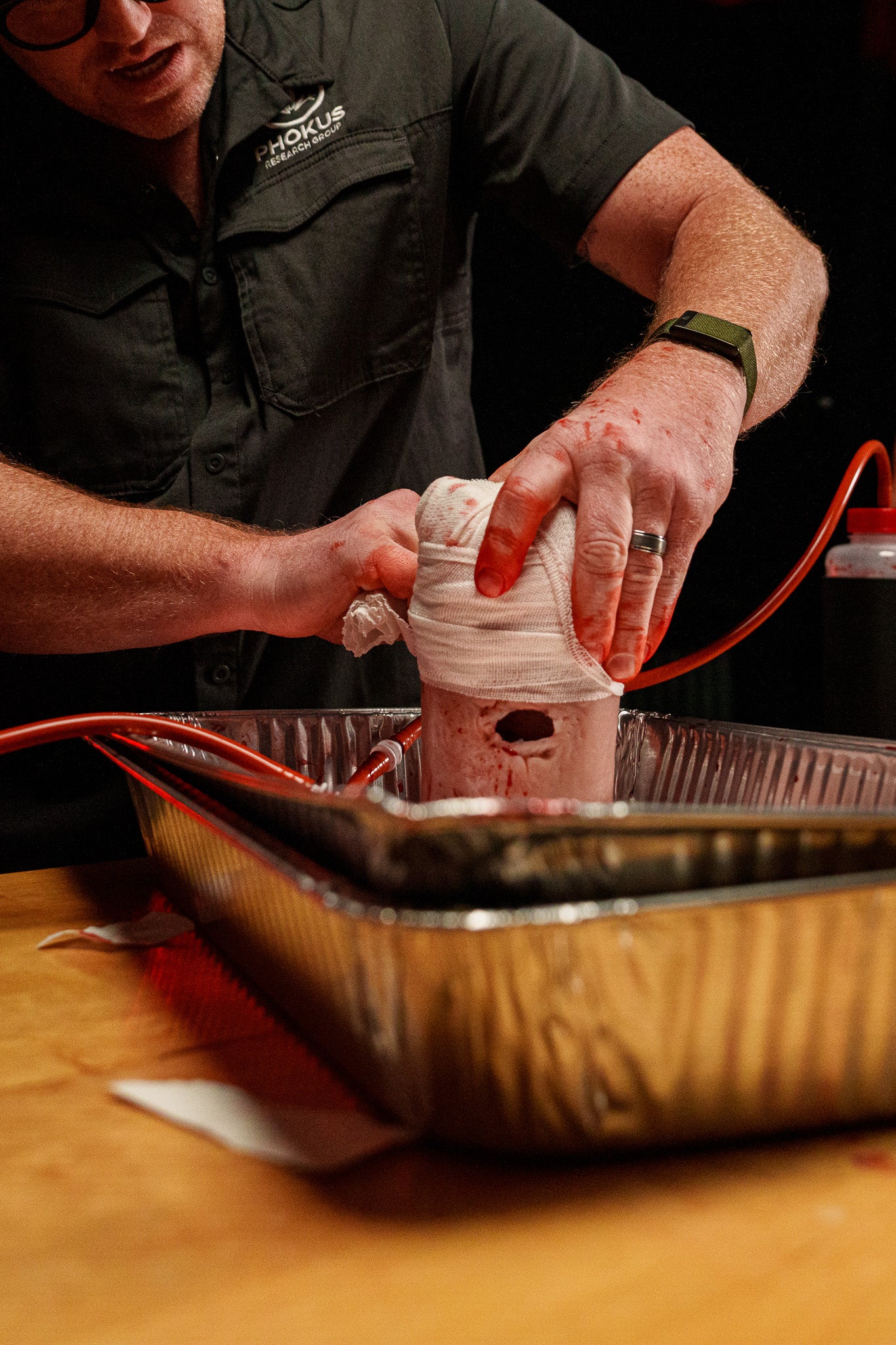
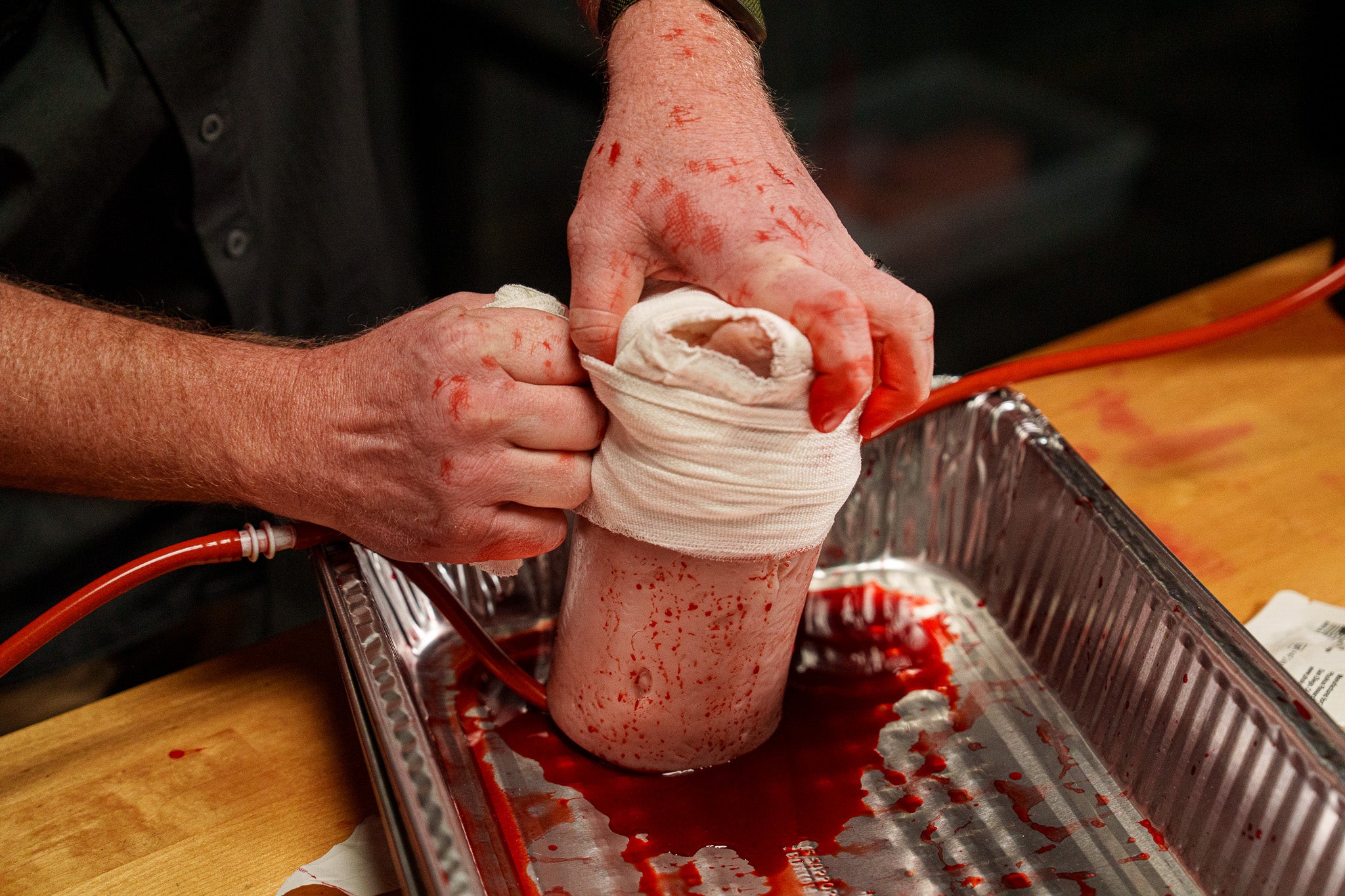
- Amputation-specific hemorrhage control. Pressure dressing technique at an amputated extremity differs fundamentally from intact limb management. Wrapping angles, gauze placement relative to the bone, and sustained pressure application must all account for the absence of the distal structure. The Wound Stump makes those differences trainable.
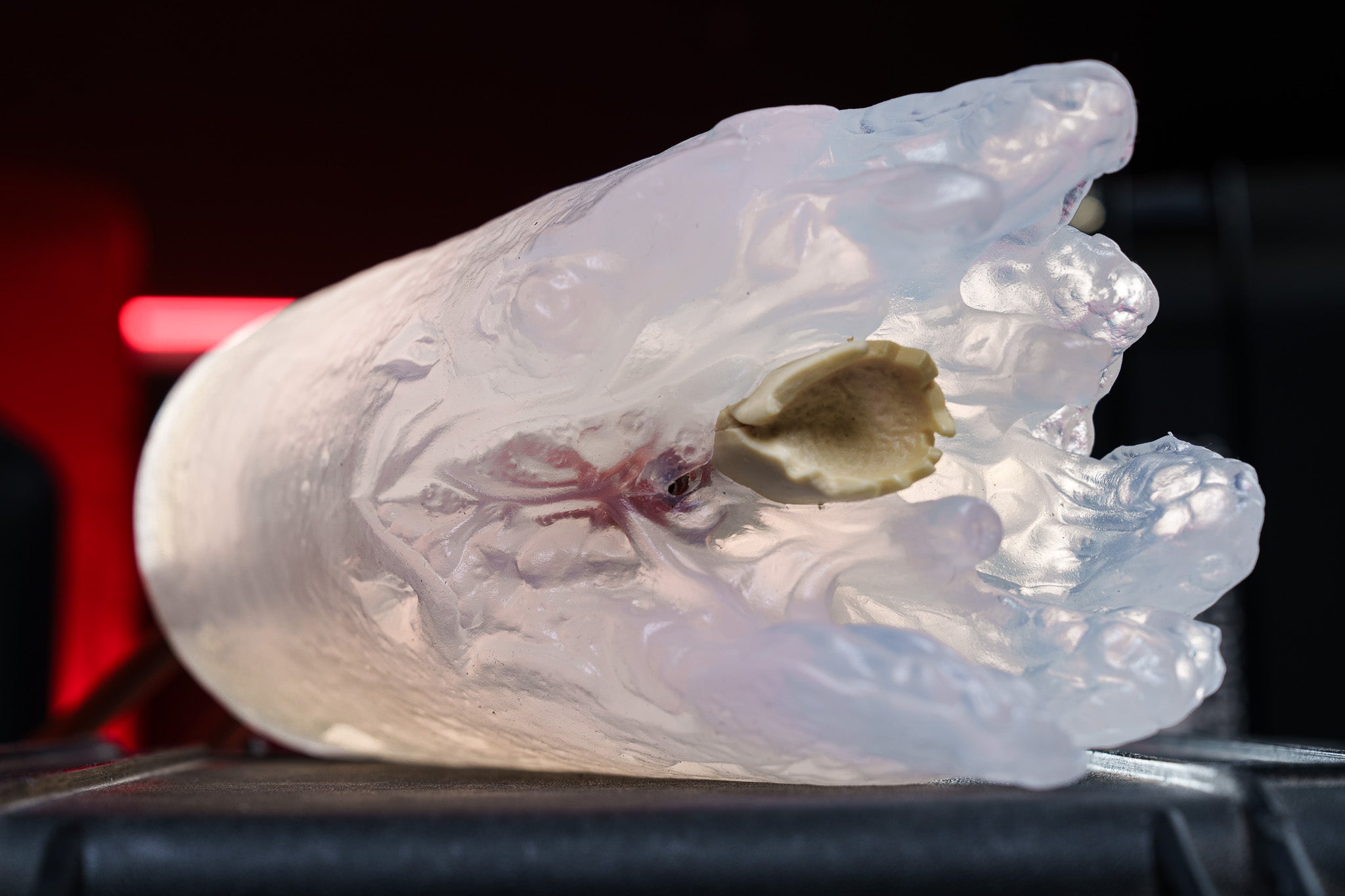
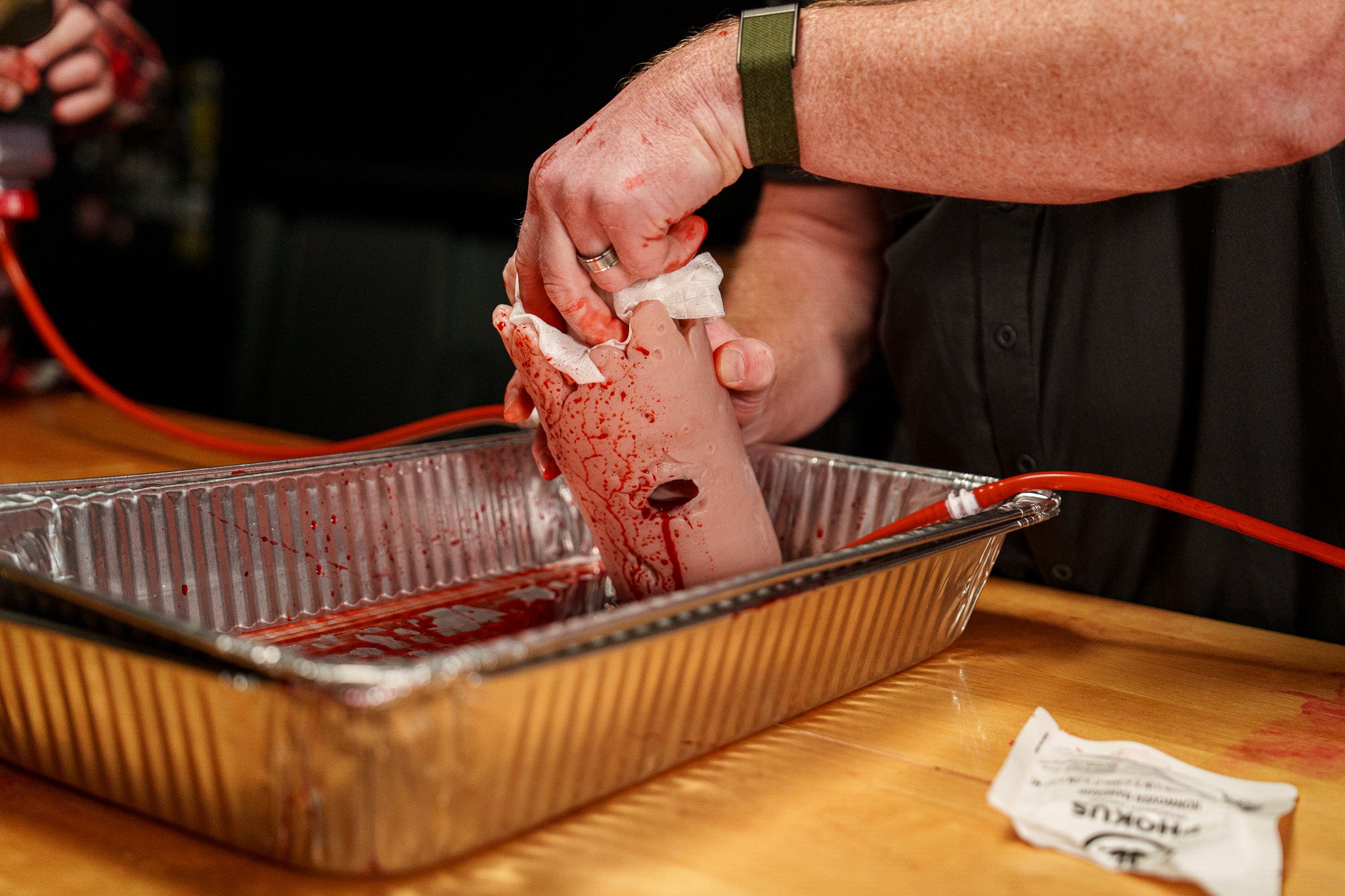
- Bone-adjacent arterial bleeder. A simulated arterial bleed positioned adjacent to the fractured bone forces students to pack deliberately and deeply — finding and addressing the source rather than surface-packing the wound. This is the technically demanding skill the Wound Stump was designed to develop.
- Secondary central gunshot wound. A second hemorrhage source on the same platform enables multiple treatment repetitions — tourniquet application, wound packing, and pressure dressing — within a single training evolution. Maximum repetition per unit.
- Tourniquet application training. The Wound Stump is designed to increase muscle memory for tourniquet training. Note: tourniquets applied during training will not occlude the simulated injury — this is intentional. The trainer develops application technique, not occlusion confirmation.
CHOOSE YOUR TRAINING CONFIGURATION
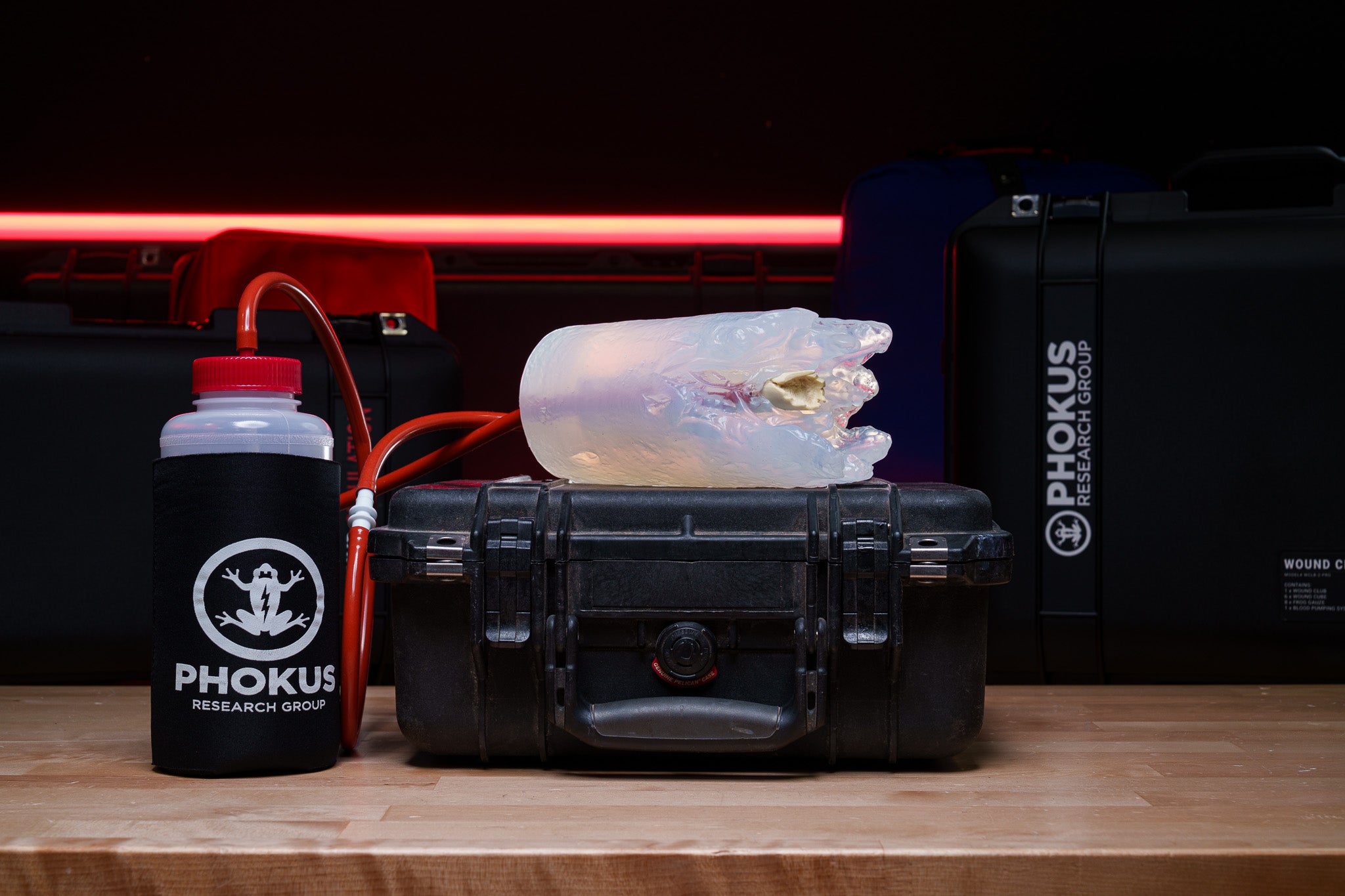
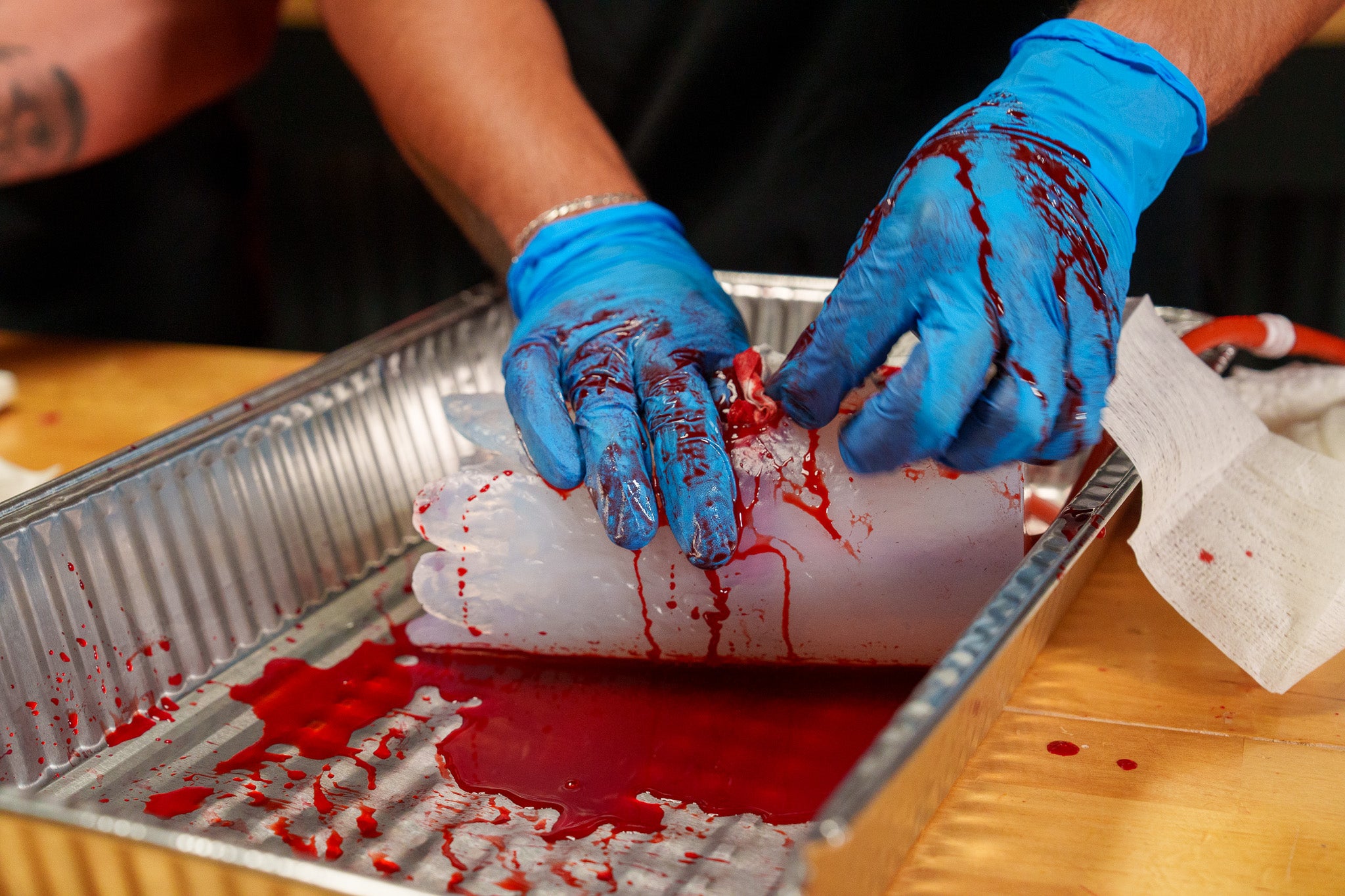
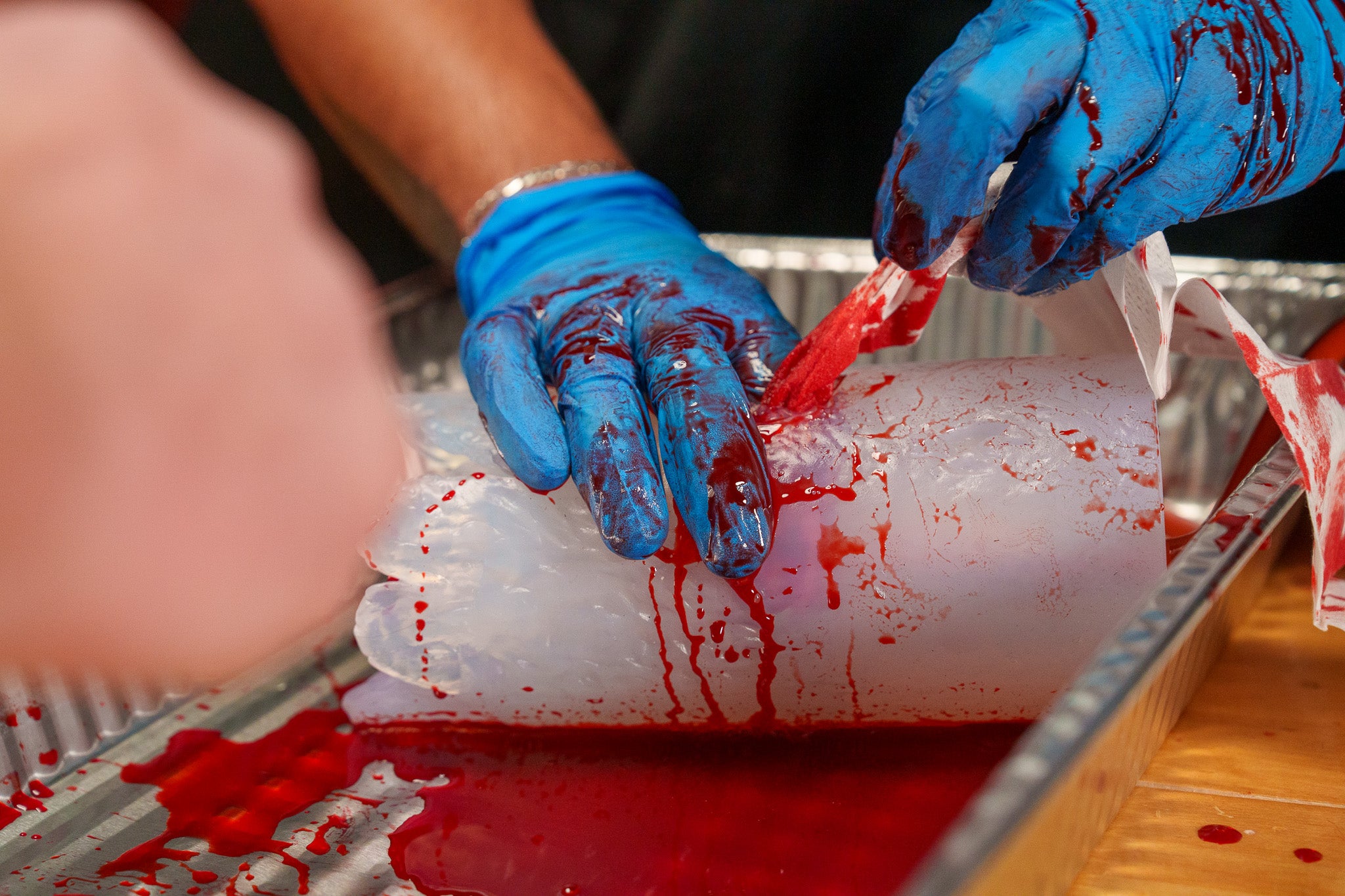
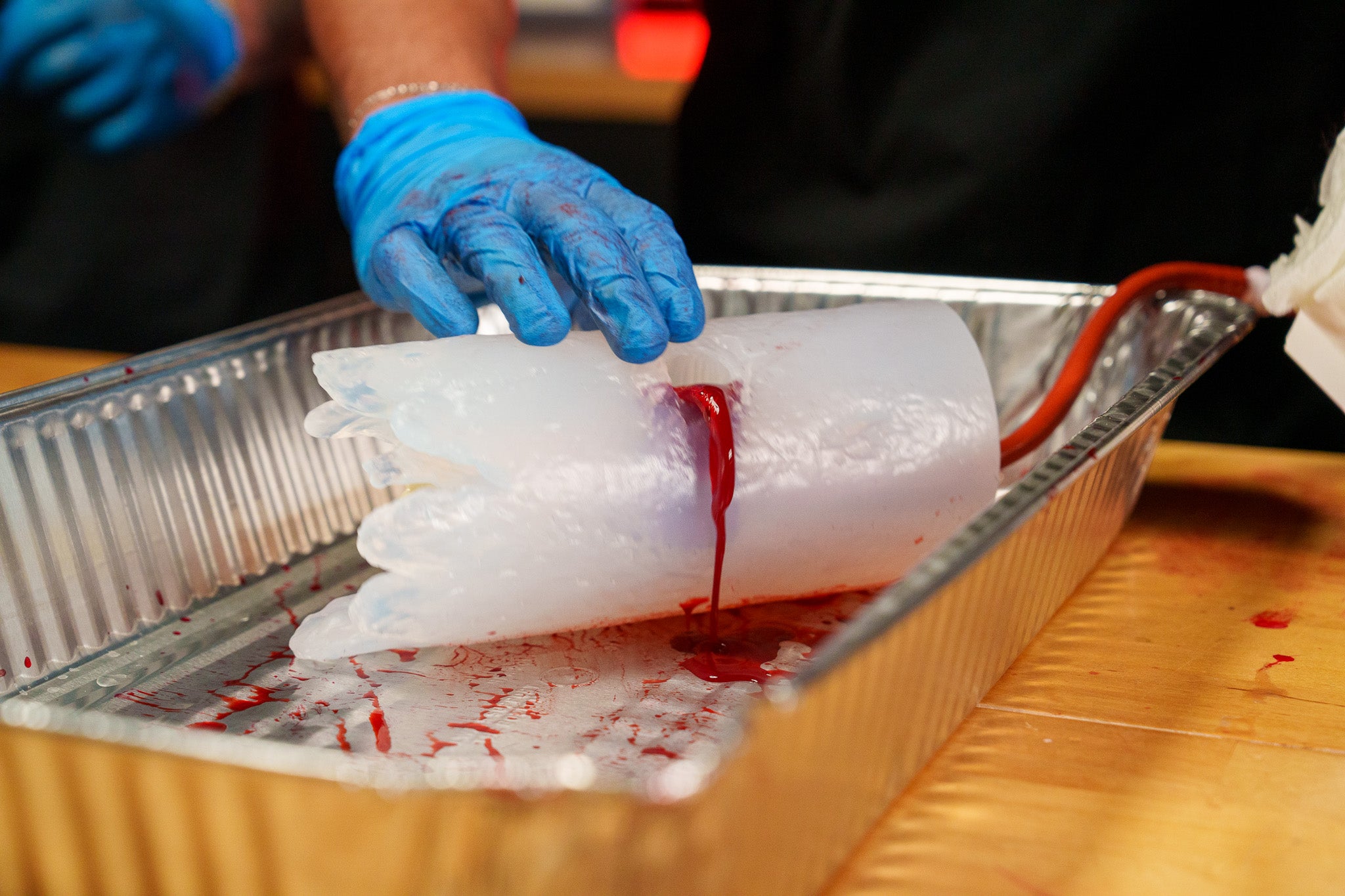
- Semi-Transparent: Reveals internal structures — bleeding pathways, wound cavity depth, and tissue layers. Ideal for foundational instruction where students need to understand the origin of hemorrhage and the anatomy of deliberate wound packing before advancing to higher-stress scenarios.
- Medium Skin Tone: Eliminates visual cues and forces reliance on tactile assessment. Students must identify bleeding sources, wound depth, and packing needs by feel alone — replicating real-world conditions and reinforcing the muscle memory that saves lives when vision is compromised.
WHAT’S INCLUDED
- One Wound Stump™
WOUND FEATURES
- 1x Traumatic limb amputation with fractured bone
- 1x Penetrating trauma (secondary wound)
- 2x Bleed-Capable Wounds
- Realistic tissue loss and density
- Compatible with blood simulant for added realism
SPECIFICATIONS
| Material | Non-Toxic Silicone |
| Size | 4" × 4" × 8.5" |
| Weight | 2.8 lbs |
TRAINING APPLICATIONS
Validated for use in the following programs:
- TCCC — Tactical Combat Casualty Care
- TECC — Tactical Emergency Casualty Care
- TEMS — Tactical Emergency Medical Support
- PHTLS — Prehospital Trauma Life Support
- Stop the Bleed® — Public hemorrhage control education
PROCUREMENT-READY FOR GOVERNMENT & MILITARY BUYERS
Government and Law Enforcement discounts available. Contact us for agency pricing.
Choose options
WOUND STUMP™
Traumatic Amputation Training. The Skills Are Different. The Trainer Has to Match.
Managing hemorrhage at a traumatic amputation is a distinct clinical skill — not a variation of wound packing on intact limbs. The bone is exposed. The tissue disruption is complex. The dead space is irregular. The wrapping and pressure techniques differ significantly from standard extremity wound management. The Wound Stump™ was built to train exactly that.
Featuring fractured bone, dense soft tissue, multiple bleeding pathways, complex dead space, and a bone-adjacent arterial bleeder, the Wound Stump replicates the specific challenges of amputated extremity hemorrhage control with the tactile fidelity that builds real competency because the responders who encounter this injury deserve training that matches what they’ll face.
WHAT THE WOUND STUMP TRAINS
- Amputation-specific hemorrhage control. Pressure dressing technique at an amputated extremity differs fundamentally from intact limb management. Wrapping angles, gauze placement relative to the bone, and sustained pressure application must all account for the absence of the distal structure. The Wound Stump makes those differences trainable.
- Bone-adjacent arterial bleeder. A simulated arterial bleed positioned adjacent to the fractured bone forces students to pack deliberately and deeply — finding and addressing the source rather than surface-packing the wound. This is the technically demanding skill the Wound Stump was designed to develop.
- Secondary central gunshot wound. A second hemorrhage source on the same platform enables multiple treatment repetitions — tourniquet application, wound packing, and pressure dressing — within a single training evolution. Maximum repetition per unit.
- Tourniquet application training. The Wound Stump is designed to increase muscle memory for tourniquet training. Note: tourniquets applied during training will not occlude the simulated injury — this is intentional. The trainer develops application technique, not occlusion confirmation.
CHOOSE YOUR TRAINING CONFIGURATION
- Semi-Transparent: Reveals internal structures — bleeding pathways, wound cavity depth, and tissue layers. Ideal for foundational instruction where students need to understand the origin of hemorrhage and the anatomy of deliberate wound packing before advancing to higher-stress scenarios.
- Medium Skin Tone: Eliminates visual cues and forces reliance on tactile assessment. Students must identify bleeding sources, wound depth, and packing needs by feel alone — replicating real-world conditions and reinforcing the muscle memory that saves lives when vision is compromised.
WHAT’S INCLUDED
- One Wound Stump™
WOUND FEATURES
- 1x Traumatic limb amputation with fractured bone
- 1x Penetrating trauma (secondary wound)
- 2x Bleed-Capable Wounds
- Realistic tissue loss and density
- Compatible with blood simulant for added realism
SPECIFICATIONS
| Material | Non-Toxic Silicone |
| Size | 4" × 4" × 8.5" |
| Weight | 2.8 lbs |
TRAINING APPLICATIONS
Validated for use in the following programs:
- TCCC — Tactical Combat Casualty Care
- TECC — Tactical Emergency Casualty Care
- TEMS — Tactical Emergency Medical Support
- PHTLS — Prehospital Trauma Life Support
- Stop the Bleed® — Public hemorrhage control education
PROCUREMENT-READY FOR GOVERNMENT & MILITARY BUYERS
Government and Law Enforcement discounts available. Contact us for agency pricing.
WOUND STUMP™
Traumatic Amputation Training. The Skills Are Different. The Trainer Has to Match.
Managing hemorrhage at a traumatic amputation is a distinct clinical skill — not a variation of wound packing on intact limbs. The bone is exposed. The tissue disruption is complex. The dead space is irregular. The wrapping and pressure techniques differ significantly from standard extremity wound management. The Wound Stump™ was built to train exactly that.
Featuring fractured bone, dense soft tissue, multiple bleeding pathways, complex dead space, and a bone-adjacent arterial bleeder, the Wound Stump replicates the specific challenges of amputated extremity hemorrhage control with the tactile fidelity that builds real competency because the responders who encounter this injury deserve training that matches what they’ll face.
WHAT THE WOUND STUMP TRAINS
- Amputation-specific hemorrhage control. Pressure dressing technique at an amputated extremity differs fundamentally from intact limb management. Wrapping angles, gauze placement relative to the bone, and sustained pressure application must all account for the absence of the distal structure. The Wound Stump makes those differences trainable.
- Bone-adjacent arterial bleeder. A simulated arterial bleed positioned adjacent to the fractured bone forces students to pack deliberately and deeply — finding and addressing the source rather than surface-packing the wound. This is the technically demanding skill the Wound Stump was designed to develop.
- Secondary central gunshot wound. A second hemorrhage source on the same platform enables multiple treatment repetitions — tourniquet application, wound packing, and pressure dressing — within a single training evolution. Maximum repetition per unit.
- Tourniquet application training. The Wound Stump is designed to increase muscle memory for tourniquet training. Note: tourniquets applied during training will not occlude the simulated injury — this is intentional. The trainer develops application technique, not occlusion confirmation.
CHOOSE YOUR TRAINING CONFIGURATION
- Semi-Transparent: Reveals internal structures — bleeding pathways, wound cavity depth, and tissue layers. Ideal for foundational instruction where students need to understand the origin of hemorrhage and the anatomy of deliberate wound packing before advancing to higher-stress scenarios.
- Medium Skin Tone: Eliminates visual cues and forces reliance on tactile assessment. Students must identify bleeding sources, wound depth, and packing needs by feel alone — replicating real-world conditions and reinforcing the muscle memory that saves lives when vision is compromised.
WHAT’S INCLUDED
- One Wound Stump™
WOUND FEATURES
- 1x Traumatic limb amputation with fractured bone
- 1x Penetrating trauma (secondary wound)
- 2x Bleed-Capable Wounds
- Realistic tissue loss and density
- Compatible with blood simulant for added realism
SPECIFICATIONS
| Material | Non-Toxic Silicone |
| Size | 4" × 4" × 8.5" |
| Weight | 2.8 lbs |
TRAINING APPLICATIONS
Validated for use in the following programs:
- TCCC — Tactical Combat Casualty Care
- TECC — Tactical Emergency Casualty Care
- TEMS — Tactical Emergency Medical Support
- PHTLS — Prehospital Trauma Life Support
- Stop the Bleed® — Public hemorrhage control education
PROCUREMENT-READY FOR GOVERNMENT & MILITARY BUYERS
Government and Law Enforcement discounts available. Contact us for agency pricing.